Nobody applauds the caregiver at the end of the day. There is no audience for the third load of laundry, the repeated answer to the same question, the drive to another appointment, or the night spent listening for sounds from the next room. Caregiving for an aging parent is one of the most loving and most exhausting things a person can do, and it is often done in private, on top of a job, a family, and a life that did not pause to make room for it. If you are caring for a mother or father who once cared for you, and you are running on empty, these prayers for caregivers were written for you — not to add one more duty to your day, but to give you a place to be honest with God about the weight you are carrying.
There is a particular kind of tired that only caregivers know. It is not fixed by an early night. It follows you into the grocery store, where you are buying soft foods and trying to remember whether you took your own tablet that morning. It is the tired of answering the same question for the fourth time before breakfast, smiling while you do it, and then sitting in the car for two extra minutes because you cannot quite face walking back inside yet. Most of what you will find online for caregivers is short: a single prayer to copy, or a list of brief prayers with a verse attached. Those help on a hard night. But caregiving is rarely a single hard night. It is months, often years, of small decisions, interrupted sleep, and love expressed in unglamorous tasks. This guide tries to match that reality, for the daughter caring for a mother with dementia, the husband whose wife no longer knows his name, the parent still caring for a grown child with a disability, the son managing care from three states away, and the woman squeezed between teenagers at home and a father in a memory-care unit.
A Prayer for the Caregiver

Heavenly Father, You see the work nobody else sees. You see the meals, the medicines, the patience stretched thin, and the love underneath all of it. I am tired in a way sleep does not fix, and I need You today. Give me energy for the tasks in front of me and grace for the ones I will get wrong. When my parent asks the same question again, give me the same gentle answer again. When I feel guilty for resenting this role, remind me that honest feelings do not cancel love. When I am afraid of what comes next, steady me with the truth that You are with both of us — with me in my weariness and with my parent in their frailty. Provide help I have not thought to ask for, rest I have not dared to take, and moments of tenderness in the middle of the hard days. Keep me from carrying alone what was never meant to be carried alone. In Jesus’ name, Amen.
Pray this prayer in the morning before the day begins, or in the car before you walk through their door. Short, honest prayers prayed often will carry you further than long prayers you never have time for. God is not grading your prayer life; He is meeting you in it, in the shower, while the kettle boils, or in the thirty seconds before a difficult conversation.
Who Counts as a Caregiver? More of Us Than We Admit
We picture a caregiver as a middle-aged daughter looking after an aging parent, and often that is exactly who she is. But the word covers far more ground, and if you have not claimed it for yourself, you may have missed the help that goes with it. A caregiver is a husband helping his wife dress after a stroke, then sitting beside her in the evening while she calls him by her late brother’s name. A caregiver is a mother in her sixties still coordinating care, appointments, and housing for an adult son with autism or a brain injury, wondering quietly who will do this when she cannot. A caregiver is a son who lives four hours away, managing bills, hiring aides, and fielding midnight calls from a neighbor, carrying guilt that he is not there and exhaustion from trying to be there from a distance.
Then there is the sandwich generation, a phrase that sounds tidy and feels anything but. You are packing school lunches in the morning and sorting a parent’s medication at night, answering a teenager’s crisis and a doctor’s voicemail in the same hour, and wondering when your own life became the corridor between two other people’s needs. Add the young caregiver who moved back home, or never left, because someone needed them, and the grandparent raising grandchildren while coping with their own health. None of these roles comes with a uniform or days off. Naming your role matters because it lets you stop comparing your load to someone else’s and start asking for the specific help your version of caregiving needs. A long-distance caregiver does not need the same help as a live-in spouse, and a dementia caregiver does not need the same prayers as a caregiver for someone recovering from surgery, though both need God, rest, and at least one other person who understands.
Scriptures for the Caregiver
Caregiving raises questions that polite church talk rarely touches: Is it wrong to feel trapped? Am I dishonoring my parent by feeling angry? How long can I keep this up? Scripture answers with unusual honesty. It never pretends that honoring parents is easy, and it never leaves the caregiver to do it alone.
Exodus 20:12 (WEB) — “Honor your father and your mother, that your days may be long in the land which Yahweh your God gives you.” Honor is bigger than obedience. In this season, honor looks like patience, advocacy, and presence. It does not mean you never feel frustrated, and it does not mean doing everything yourself. It means treating your parent as a person of God-given dignity, even when the roles have reversed.
1 Timothy 5:4 (WEB) — “But if any widow has children or grandchildren, let them learn first to show piety towards their own family, and to repay their parents, for this is acceptable in the sight of God.” Repaying parents is described here as piety — as worship. The meals and errands and advocacy are not interruptions to your spiritual life. They are part of it. God sees the repayment, even when your parent can no longer say thank you.
Isaiah 40:31 (WEB) — “But those who wait for Yahweh will renew their strength. They will mount up with wings like eagles. They will run, and not be weary. They will walk, and not faint.” Waiting on the Lord is not passive here; it is how strength gets renewed. Caregiving strength does not come from trying harder. It comes from returning, again and again, to the God who does not grow tired, and letting Him carry what you cannot.
Matthew 11:28 (WEB) — “Come to me, all you who labor and are heavily burdened, and I will give you rest.” Jesus speaks directly to people carrying heavy loads, and caregiving is exactly that kind of load. His rest is not always a day off — though you need those too — it is the rest of being known and carried. Bring Him the weight, even if all you can say is, “I am tired.”
Galatians 6:2 (WEB) — “Bear one another’s burdens, and so fulfill the law of Christ.” This verse is permission to ask for help. Bearing burdens was never meant to be a solo project. If you are doing everything yourself, that is not faithfulness; it is isolation. Let a sibling, a friend, a neighbor, or a church carry part of the load. Accepting help honors the law of Christ just as much as giving it.
Psalm 71:9 (WEB) — “Don’t reject me in my old age. Don’t forsake me when my strength fails.” This is your parent’s prayer as much as yours, and praying it for them can soften your heart toward them. The parent who repeats stories, who is afraid at night, who resists help, is often praying this psalm without words. When you see their fear instead of only their stubbornness, patience comes more easily.
2 Corinthians 12:9 (WEB) — “My grace is sufficient for you, for my power is made perfect in weakness.” There will be days when you are simply not enough — not patient enough, not strong enough, not wise enough for the decision in front of you. That is not the end of the story. God’s power shows up most clearly precisely where yours runs out, and admitting weakness is how you make room for it.
1 Kings 19:4-5 (WEB) — Elijah, exhausted after a great effort, asked God to take his life, saying, “It is enough.” Then an angel touched him and said, “Arise and eat.” God did not rebuke Elijah for burnout. He gave him food, sleep, and then more food and sleep, before any further conversation about the work. If your exhaustion has made your prayers sound darker than you expected, you are in good, biblical company, and the first faithful step may be as ordinary as a meal and a night of real sleep.
Psalm 23:1-3 (WEB) — “Yahweh is my shepherd: I shall lack nothing. He makes me lie down in green pastures. He leads me beside still waters. He restores my soul.” A shepherd leads sheep to rest; He does not drive them until they collapse. If your soul needs restoring, that is not selfishness. It is what the Shepherd does, and letting Him lead you to still waters — a walk, a quiet hour, a night of real sleep — is part of caring well.
Prayers for the Hardest Moments
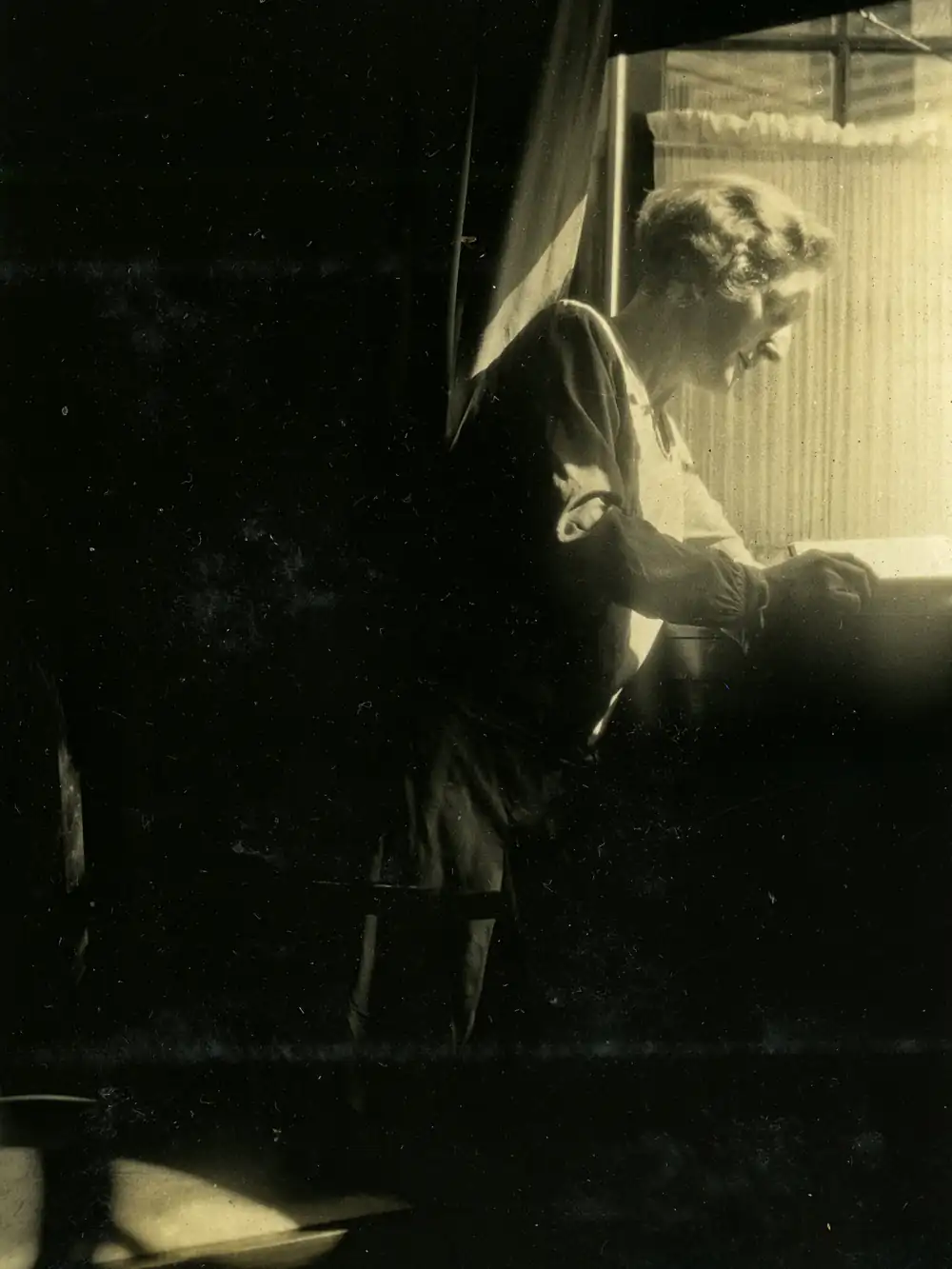
A single general prayer, however beautiful, cannot cover every kind of hard day caregiving produces. The prayer you need when your mother does not know you is different from the prayer you need in a hospital corridor, and both are different from the prayer you need when you are angry at a sibling who visits twice a year and criticizes everything. Keep these short prayers close, on your phone or on a card by the bed, and use the one that fits the hour you are actually in.
When dementia steals recognition. “Father, she looked straight through me today, and it hurt more than I want to admit. Help me remember that You know her fully, even when she cannot know me. Let my presence be steady even when her memory is not. Give me one small connection today — a hand held, a song remembered, a moment of calm — and help me receive it as enough. Amen.” Dementia caregiving has a particular grief: you lose the person in pieces while they are still sitting across the table. Sundowning, repeated questions, wandering, and accusations that you have stolen something are symptoms, not verdicts on your love, though they feel personal because they happen in your kitchen. Praying for the person underneath the disease — the full life God still sees — can keep resentment from hardening into bitterness.
When you are a spouse, grieving a marriage that still exists. “Lord, I married for better and for worse, and this is the worse I never pictured. I lie beside someone who does not know me, I grieve a partner I still feed and bathe, and I feel married and widowed at the same time. Do not let me be ashamed of that grief. Sit with me in this lonely marriage, give me companionship through friends and church, and help me honor my vows without pretending this is not heartbreaking. Amen.” Spouses are often the most invisible caregivers, because everyone assumes a husband or wife will simply cope, and because admitting loneliness inside a marriage feels disloyal. It is not. Anticipatory grief — grieving someone who is still alive — is real grief, and it deserves prayer, conversation, and support, not silence.
When anger and guilt arrive together. “God, I am angry and I am ashamed of being angry, sometimes in the same breath. I love this person and I resent what this role has cost me, and I do not know how to hold both truths. Forgive me where I have been unkind. Free me from guilt over feelings that are signals, not sins — tiredness, grief, and the wish for my old life back. Show me what the anger is pointing to: help I need, rest I have postponed, or a boundary I have been afraid to set. Amen.” Guilt over a real wrong deserves confession. Guilt over feeling tired, needing help, or wishing for freedom is not sin, though it can feel louder than any sermon. Naming it to God, out loud, loosens its power to shame you into silence.
When you must advocate, and at night when worry will not let you sleep. In a hospital, pray: “Father, give me clarity when the words are full of jargon, courage when the room is full of professionals, and calm when I feel rushed into a decision. Help me ask the question I am afraid sounds foolish, write down what is said, and speak for someone who cannot speak for themselves. Amen.” Advocacy is a spiritual task as much as a practical one. Take notes, bring a list, ask who to call after hours, and do not apologize for asking twice. At 3 a.m., when your mind rehearses everything that could go wrong tomorrow, pray: “Lord, I hand You the list I cannot solve in the dark: the fall, the bill, the call I dread. Watch over the house while I sleep. If I am woken, give me patience for that hour too.” Night caregiving breaks sleep in a way that accumulates. If nights are consistently broken, that is not a badge of honor to endure silently; it is a practical problem to raise with a doctor, a family member, or a respite service.
A Sustainable Rhythm: Rest, Help, Boundaries, and Hard Decisions

Sustainable caregiving runs on small rhythms, not heroic efforts. Begin the day by naming the one hardest moment you expect — the bath, the doctor’s call, the conversation about driving — and pray for that moment specifically. Keep a breath prayer for the hard minutes: “Lord, give me patience for this next answer.” When guilt arrives, as it will, test it honestly: guilt over a real wrong deserves confession, but guilt over feeling tired, or over needing help, or over wishing for your old life back, is not sin. Name it, hand it to God, and let it go.
Build rest into the week the way you build appointments into it, because rest that is not scheduled rarely happens. Respite is not a luxury and it is not abandonment. It is the planned, regular handing over of care to someone else — a family member, a home aide, a day program, a church volunteer — so that you can sleep, see a doctor, or simply be a person for an afternoon. Many caregivers resist respite because they feel guilty, because the person they care for protests, or because explaining the routine feels like more work than doing it yourself. Those feelings are understandable, and they are also the reason respite needs to be booked before you are desperate, in small, repeatable doses. Ask one person for one specific thing this week — a ride, a meal, two hours of sitting with your parent — instead of waiting for someone to guess what you need. Specific asks get specific yeses; vague cries for help often get vague sympathy.
Talk honestly with your family about money, roles, and limits before a crisis forces the conversation. Sibling conflict is one of the heaviest, least prayed-about parts of caregiving. The child who lives nearby does the daily work, the child who lives far away questions the decisions, and everyone carries a different memory of childhood and a different idea of what honor requires. A family meeting — even a short, structured one with an agenda, a note-taker, and a decision about who does what — can turn resentment into a plan. Pray before it, not just for harmony, but for honesty. Long-distance caregivers can contribute in real ways: managing paperwork, researching services, paying bills, coordinating schedules, and visiting on a predictable rhythm, rather than only appearing at crises.
Money and legal planning also need prayer, not just paperwork. Power of attorney, advance directives, wills, and understanding what insurance or public programs will and will not cover are not unspiritual topics; they are stewardship, and they protect both the caregiver and the person cared for. You do not need to solve all of it in a week, and this guide is not legal or medical advice, but you can pray through one decision at a time. A prayer for the hard decisions: “Father, show me the loving choice, not just the dutiful one. Give me counsel from wise people, peace about what I cannot control, and freedom from the lie that love means doing everything myself. Amen.” A loving decision made with counsel and prayer — including, sometimes, moving a parent to a care facility where professional care is safer — is not abandonment, even when it feels like it on the drive home.
Do not neglect your own health in the name of care. Caregivers routinely skip their own appointments, eat poorly, and ignore symptoms because there is always someone else’s need first. Book your own check-up, tell your doctor you are a caregiver, and watch for warning signs that rest alone is not fixing: constant despair, inability to sleep even when you have the chance, anger that frightens you, or thoughts of harming yourself or the person you care for. Those are not faith failures. They are health signals, and getting help — from a doctor, a counselor, a pastor, or a support group — is part of caring well. Once a week, have one honest conversation about caregiving with someone who is not in the middle of it. Tell them the unedited version: what is working, what is failing, and what you are afraid of. Silence is what turns exhaustion into burnout; a weekly conversation keeps the weight shared and the perspective honest.
Praying With the Person You Care For

Caregiving can quietly turn prayer into something you do about someone, rather than with them. Wherever possible, keep a small shared practice alive, even if it is shorter and simpler than it used to be. A familiar hymn hummed together, a single verse read aloud slowly, the Lord’s Prayer said holding hands, or a simple thanksgiving — “Thank You, God, for this meal, for this day, for each other” — can anchor a person with dementia far longer than a conversation can. If the person you care for can no longer pray in words, your prayer beside them still counts as shared prayer; presence is a form of intercession. Pray for them by name, not just for their needs. Each morning, name one good thing about them — a kindness they showed you, a story they told, a strength they still have — and thank God for it before you ask for anything. That small habit changes how you walk into their room, because you arrive remembering who they are rather than only what they need. Watch, too, for small graces: a moment of lucidity, a shared laugh, a hand held without resistance. These moments do not erase the hard parts, but they remind you why the work matters.
It also helps to remember the longer story of care in Scripture. Ruth stayed with Naomi when staying cost her a future she could have chosen elsewhere. The friends who carried a paralyzed man to Jesus did the physical, awkward, undignified work of getting him through a roof because they believed help was on the other side. Martha, busy with serving, and Mary, sitting at Jesus’ feet, both loved Him, and both needed to learn the other’s lesson at different times. You may be Martha this year, and that is not a lesser calling. The question is not whether your service counts — it does — but whether you will also let yourself sit, even briefly, and be restored by the One you serve.
When Caregiving Ends: Grief After the Role Ends

Almost no one prepares you for the quiet after caregiving ends. The phone stops ringing with doctor’s calls, the medication schedule disappears from the fridge, and the days that were once overfull suddenly feel empty. Many caregivers feel relief mixed with guilt for feeling it, and grief mixed with a strange loss of purpose: the person you organized your life around is gone, or now cared for by others, and you no longer quite know who you are without the role. That emptiness is not ingratitude. It is the other side of love that showed up every day, and it deserves its own mourning. Give yourself permission to rest before rushing to fill the gap, to grieve the person and the purpose together, and to ask God what this next season is for rather than treating the end of caregiving as the end of your usefulness.
A prayer when caregiving ends. “Father, the work is finished and I do not know what to do with my hands, or my days. Thank You for the years I got to care, and forgive me for the days I did it badly. If I feel relief, do not let guilt poison it; if I feel lost, show me that I am still Yours without this role. Help me grieve honestly, rest deeply, and listen for what You have next — without hurrying past the goodbye. Amen.”
Frequently Asked Questions
Is it wrong to feel resentful about caregiving? No. Resentment is a signal, not a verdict — usually a signal that you are exhausted, unsupported, or grieving. Bring the feeling to God honestly instead of hiding it, and then look at what it is telling you: do you need help, rest, or a hard conversation? Feelings named to God lose much of their power to shame you.
How do I keep going when I am exhausted? Stop trying to do everything yourself. Ask for specific help, take real rest without apology, and simplify what can be simplified. If exhaustion becomes constant despair, talk to a doctor or counselor; burnout is a health issue, not a faith failure, and getting help is part of caring well.
Is moving a parent to a care facility dishonoring them? Not necessarily. Honor means seeking their safety, dignity, and best care — and sometimes that means professional care you cannot provide at home. Make the decision prayerfully, with counsel and with your parent’s voice heard as much as possible, and release the guilt that says love must look like doing it all yourself.
What if my parent and I had a difficult relationship? Caregiving does not erase history, and God does not ask you to pretend it did. You can honor a difficult parent — by ensuring safety, dignity, and care — while also holding boundaries, grieving what was missing, and forgiving in the slow, repeated way forgiveness often works. Pray honestly about the past, seek counsel where old wounds still drive present decisions, and do not let guilt convince you that boundaries are betrayal.
How do I pray when I am angry at God? Pray the anger itself. The Psalms are full of complaints, questions, and raw grief directed at God, and they are Scripture, not shameful exceptions. Tell Him you do not understand why this illness, why this long road, why prayers for healing seem unanswered. Lament is not the opposite of faith; it is faith refusing to pretend.
For more help in this library, visit our Guides page and explore our Family & Parenting archive, read our Statement of Faith, and keep going with companion guides — our prayers for a wayward child and our prayers for grief and loss for the sorrows woven into care, and the next guide in this batch, our prayers for addiction recovery when the person you care for is fighting that battle too.

The PrayersWisdom Editorial Team writes long-form, Bible-based prayer guides for Christians going deeper in prayer.