Most Sundays, your pastor stands up in front of everyone looking steady, prepared, and strong. What you do not see is the rest of the week: the hospital visits, the counseling conversations that cannot be repeated, the criticism that arrives anonymously, the sermon that would not come together, the family that shares their pastor with an entire congregation, and the spiritual weight of carrying other people’s sorrows. Church leaders and pastors do holy work, and holy work is heavy work. These prayers for church leaders and pastors were written for the people in the pews who want to do more than appreciate their leaders from a distance — they were written to help you pray for them, specifically, regularly, and with understanding.
This guide is a long-form guide for intercession, not a quick blessing to send. You will find a prayer for your leaders, Scriptures that show what their calling costs and what they most need, and a practical pattern for praying for them week after week. You will also find help for the harder parts nobody puts on a prayer card: praying when you disagree with your leaders, when burnout is quietly setting in, when a leader fails badly, and when a church is caught between pastors. Praying for your leaders is one of the most powerful things an ordinary church member can do, because it reaches places your encouragement, your criticism, and your committee meetings cannot reach.
A Prayer for Church Leaders and Pastors
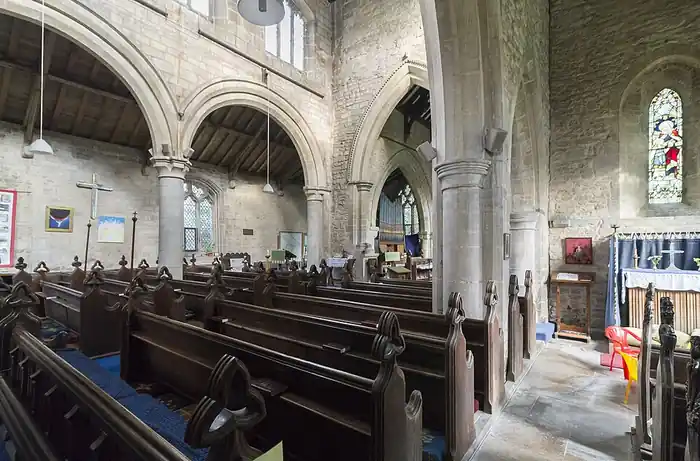
Heavenly Father, thank You for the leaders You have given our church. You know their names, their burdens, and the parts of their work nobody ever sees. Give our pastors and leaders wisdom for the decisions in front of them, courage to speak Your truth even when it is unpopular, and strength for the days when ministry feels thankless. Protect their marriages and their children, who carry a weight they did not choose. Guard them from pride when they are praised and from despair when they are criticized. Keep them close to You in private, not just useful for You in public. Provide friends who will tell them the truth, rest they will actually take, and joy in the work You have called them to. When they are weary, renew them. When they are tempted, rescue them. When they fail, restore them gently. And give us, their people, grace to pray for them instead of merely expecting from them. In Jesus’ name, Amen.
Pray this prayer by name. Replace “our pastors and leaders” with the actual names of your pastor, elders, staff, and ministry leaders, and watch what changes. Prayer becomes far more real when it has a face attached to it. If you pray this once a week, on the same day each week, you will be doing more for your leaders than most of their congregation ever does — and named prayer keeps you honest, because it is much harder to treat someone as a category once you have carried them before God by name.
Why Your Leaders Need Prayer More Than Applause

Applause is easy, and it costs the giver nothing. Prayer costs attention, and that is exactly why it matters. A leader can be applauded on Sunday and still go home lonely, because applause is about a performance while prayer is about a person. Leaders live with a particular kind of loneliness: they know things they cannot share, they carry decisions others will judge without the full picture, and they often have many acquaintances and few confidants. Friendship inside the congregation is complicated by authority and confidentiality, which is why so many pastors have no one with whom they can be fully unguarded.
There is also the matter of being watched. A pastor’s words are weighed every week, their family is noticed wherever they go, and their mistakes are remembered longer than most people’s. That constant visibility wears a person down in ways a single hard week does not explain. Prayer does not remove the visibility, but it does something applause never can: it asks God to sustain the inner life of the leader, not merely to reward the outer work. When you pray for a leader’s soul before their sermon, their marriage before their ministry, and their rest before their results, you are praying in the order that actually keeps a shepherd standing.
Scriptures for Church Leaders

The Bible is unusually honest about leadership: it honors leaders, and it never pretends their work is easy. These verses will teach you what to pray for, because they show you what leaders actually face — and what God promises to those who carry the calling.
1 Thessalonians 5:25 (WEB) — “Brothers, pray for us.” Three words, and they are the whole reason for this guide. Paul, an apostle, asked ordinary believers to pray for him. Your leaders need your prayers just as much, whatever their title. If Paul asked for prayer, no pastor is above needing it, and no church member is below offering it.
1 Thessalonians 5:12-13 (WEB) — “We ask you, brothers, to respect those who labor among you, and are over you in the Lord, and admonish you, and to esteem them very highly in love for their work’s sake. Be at peace among yourselves.” Honoring leaders and peace in the congregation belong together. Pray that your church would hold both, because when high regard collapses into suspicion, peace usually follows it out of the door.
Hebrews 13:17 (WEB) — “Obey those who rule over you, and submit to them, for they watch for your souls, as those who will give account.” Leaders watch for your soul, and they will give an account for how they did it. That is a sobering responsibility, and it is why your prayers matter: you are praying for people who carry an eternal weight on your behalf. Pray that they would lead with joy and not with groaning, as the verse goes on to say.
1 Timothy 3:1 (WEB) — “This is a faithful saying: if a man seeks the office of an overseer, he desires a good work.” Leadership in the church is a good work — not a platform, not a career ladder, a good work. Pray that your leaders would keep seeing it that way, especially on the days when the work feels anything but good: when the meetings run long, the budget is tight, and the fruit is invisible.
Jeremiah 3:15 (WEB) — “I will give you shepherds according to my heart, who shall feed you with knowledge and understanding.” Shepherds after God’s own heart feed people with knowledge and understanding, not with entertainment or flattery. Pray that your leaders would study deeply, preach truthfully, and feed their people real food — and pray that you would receive it with gratitude rather than constant complaint.
1 Peter 5:2-3 (WEB) — “Shepherd the flock of God which is among you, exercising the oversight, not under compulsion, but voluntarily, not for dishonest gain, but willingly, not as lording it over those entrusted to you, but becoming examples to the flock.” This is the job description for a pastor: willing, honest, humble, exemplary. Pray for each word of it. Pray that your leaders would serve willingly rather than resentfully, honestly rather than for gain, humbly rather than domineeringly — and that their example would be one worth following.
Acts 20:28 (WEB) — “Take heed, therefore, to yourselves, and to all the flock, in which the Holy Spirit has made you overseers, to shepherd the assembly of God which he purchased with his own blood.” Leaders must watch themselves before they watch the flock, and the flock was bought at a price that should humble shepherd and sheep alike. Pray for your leaders’ own souls first, before their sermons, strategies, or success.
Galatians 6:9 (WEB) — “Let us not be weary in doing good, for in due season we shall reap, if we don’t give up.” Weariness is the occupational hazard of ministry. Leaders pour out week after week, often without seeing results, and the temptation to give up is constant. Pray against weariness in your leaders: for fresh strength, for visible fruit at just the right time, and for the long view that keeps them going when this week’s work feels pointless.
Ephesians 6:19 (WEB) — “On my behalf, that utterance may be given to me in opening my mouth, to make known with boldness the mystery of the Good News.” Paul asked for prayer for boldness in preaching. Your pastor needs the same prayer every week: that when he opens his mouth, God would give him the words, and that he would speak them boldly rather than safely. Pray for Sunday’s sermon before Sunday arrives — for the study, the courage, and the hearers’ hearts.
James 3:1 (WEB) — “Let not many of you be teachers, my brothers, knowing that we will receive heavier judgment.” Teachers and preachers face a heavier judgment, because their words shape other people’s faith. That should make you pray for your leaders with gravity, not gossip: they will answer for what they taught. Pray that they would teach carefully, live consistently, and fear God more than their audience.
Isaiah 40:11 (WEB) — “He will feed his flock like a shepherd. He will gather the lambs in his arm, and carry them in his bosom. He will gently lead those who have their young.” Your leaders are themselves sheep before they are shepherds, and they need the same gentle care they give others. Pray that the Chief Shepherd would carry your leaders the way they carry you — gently, especially when they are young in faith, tired in body, or tender in heart.
A Week of Prayer for Your Leaders

The most useful way to pray for leaders is to make it specific and regular. Pick one day a week — Saturday evening, before Sunday’s services, works well as an anchor — and build a simple rhythm around it. On Monday, pray for your leaders’ souls: their private prayer, their reading of Scripture for themselves rather than for a sermon, and their honesty before God when nobody is watching. Leaders can spend so much time feeding others that they quietly starve themselves, and the first sign is rarely dramatic. It is a sermon prepared without ever being prayed over, or a week in which God was studied but never enjoyed.
On Tuesday and Wednesday, pray for their work: the counseling conversation they cannot discuss, the elder meeting where a hard decision waits, the sermon taking shape. Pray for wisdom that is both kind and clear, because leaders constantly have to hold both at once — telling the truth without crushing people, and showing grace without pretending wrong is right. On Thursday, pray for their families and their rest, which are often the first things sacrificed when ministry expands. On Friday, pray for protection: from temptation, from cynicism, and from the slow belief that they are only as valuable as last Sunday’s attendance. On Saturday evening, pray for Sunday itself, and on Sunday, pray during the service, not only before it. Listen as someone asking God to use the sermon, not merely grading it afterwards.
You do not need to pray all of this every day. Pick the day’s focus, pray it in two or three honest sentences, and move on. A short, specific, repeated prayer will shape your church more than an ambitious plan you abandon by February. If a prayer team or small group wants to adopt this pattern, divide the days between people, and let one person carry Saturday’s prayer for Sunday every week without fail. Praying generally (“bless my pastor”) is better than nothing, but praying specifically (“give him wisdom for the elder meeting on Tuesday, and protect his daughter’s heart as she grows up in a fishbowl”) is what actually sustains a leader.
A Short Prayer for Sunday Morning
This guide opens with a long prayer, and that is right for a weekly rhythm — but on a Sunday morning you may want something you can pray in under a minute before you leave the house. Keep this one:
Lord, bless our leaders today. Give them clear words, steady hearts, and joy in preaching Your truth. Guard their families while they serve, and open my ears to hear what You want to say to me through them. Amen.
Pray it in the car, on the walk to church, or as the service begins. A sixty-second prayer, prayed every Sunday, will shape how you listen far more than a long prayer prayed once and forgotten.
Praying for Their Families
Do not forget their families. A pastor’s spouse and children live a public life they did not choose: watched, judged, expected to be exemplary, and often lonely. Pray for the spouse’s own faith and friendships, and for freedom to be an ordinary Christian rather than an unpaid member of staff. Pray for the children’s freedom to be ordinary kids — to doubt, to struggle, to make mistakes without every one becoming church news — and for the family’s private life to be guarded from the congregation’s demands. Some of the most important prayers you will ever pray for your church are prayed for people who never stand on the platform.
Pray, too, for provision in plain terms. Many pastors, especially in small churches and bi-vocational ministry, carry real financial pressure: a modest salary, housing tied to the job, the cost of training, and the fear of what happens if they ever need to leave. Pray that churches would pay their leaders fairly and without resentment, and that leaders would be free from the anxiety of wondering whether faithfulness will cost their family its home. If your church has a part in that decision, pray before the budget meeting with the same seriousness you pray before the sermon, and protect a day off that is actually off and a holiday that is not interrupted by every crisis.
Burnout, Criticism, and Loneliness
Burnout rarely announces itself. It arrives as shorter patience at home, sermons that feel flatter, meetings forgotten, laughter that comes less easily, and a growing dread of Monday. Leaders often keep going because stopping feels like letting everyone down, and admitting exhaustion feels like admitting failure. Pray that your leaders would notice the warning signs early, tell someone honest about them, and be given real rest before collapse forces it — a protected day off, a genuine holiday, permission to study without producing something, and friends outside the church who do not need anything from them.
Criticism is the other slow drain. A pastor can receive a hundred kind words and still lie awake over one harsh one, especially when it arrives anonymously or second-hand. Pray for a thick skin and a soft heart at the same time: thick enough not to be ruled by every opinion, soft enough to hear fair correction without becoming defensive. And pray for your own part in it. Before you repeat a complaint about a leader, ask whether you have prayed for them about the same issue, spoken to them directly, and considered what you do not know. Prayer first does not mean never raising a concern. It means raising it as someone who has already carried the person before God, rather than as a critic who has only carried the grievance to others.
Loneliness deserves its own prayer, because leaders often have many acquaintances and few confidants. Pray that your leaders would have at least one trusted friend, a mentor, or a fellow pastor with whom they can be unguarded — someone who knows their struggles before they become crises, and who will ask the second question when the first answer is “I’m fine.” That one friendship may do more to keep a leader in ministry than any conference or pay rise.
When You Disagree, and When a Leader Fails
When your leaders disappoint you — and they will, because they are human — let prayer come before complaint. Bring your hurt to God first, ask Him to show you the whole picture, and pray for the leader’s restoration before you demand their correction. Disagreement itself is not disloyalty. Ask God to show you whether your objection is about a clear biblical issue, a matter of style and preference, or a wound that has attached itself to a decision. Pray for wisdom for them and grace for yourself in the same breath, for the unity of the church to survive the disagreement, and for the conversation to stay honest, direct, and kind — not carried on in corridors, group chats, and parking-lot conferences.
Serious failure is different from ordinary disappointment, and prayer must not be used to excuse it. When a leader has seriously failed — morally, financially, or through abuse of power — pray honestly: for truth to come fully into the light, for the wounded to be cared for first and believed, for genuine repentance rather than managed reputation, and for biblical accountability that is neither a cover-up nor a public execution. Pray for the leader’s family, who often suffer most and are blamed least fairly, and for the congregation, whose trust has been broken and whose faith may be shaken. Do not carry such a matter alone: wise counsel outside the situation, and the proper church and legal processes where they apply, are part of faithfulness, not alternatives to prayer.
Restoration, where it is genuinely possible, is slow work, and prayer should be patient work too. Some leaders, after honest repentance and a proper season away from ministry, may one day serve again in some capacity; others should not return to the same role, and that too can be a grace. Pray that churches would have the wisdom to tell the difference, the courage to protect the vulnerable even when it is costly, and the compassion to remember that a fallen leader is still a person for whom Christ died — without letting compassion erase consequences.
Leaders Beyond the Senior Pastor, and Seasons of Transition
Most churches are led by more people than the person on the platform. Elders carry decisions and discipline. Deacons carry practical mercy. Youth and children’s workers carry the next generation. Worship leaders, administrators, small-group leaders, and volunteers carry the week-to-week life of the church, often without a title or a salary. Pray for them by role and by name, because their work is just as exposed to weariness, criticism, and spiritual attack, and far less likely to be noticed when it goes well. A church that only prays for its senior pastor is praying for only part of its leadership.
Transitions test a church’s prayer life more than almost anything else. Pray for an aging pastor facing retirement with dignity and a clear sense of what comes next, for a church searching for a new leader without rushing or panicking, for an interim leader holding things steady without being treated as a placeholder, and for a congregation learning to love a new pastor without constantly comparing them to the last one. Pray, too, for leaders in small and rural churches, where one pastor may preach, visit, fix the building, and bury the dead with little help and little recognition. Their faithfulness is not smaller because their congregation is.
How to Pray for Your Leaders, and Encourage Them Well
Tell your leaders you are praying for them — and mean it. A short, specific note (“I prayed for your sermon preparation this week, and for your family”) does more for a pastor’s heart than a hundred compliments about a sermon. Leaders are often told they are appreciated in general and rarely told they are prayed for in particular. Your note may be the one encouragement that arrives on the hardest week of their year. Ask occasionally how you can pray for them, and then follow up the next week. Leaders are asked that question often and answered honestly rarely; when someone actually remembers, it matters.
Finally, be the kind of member your prayers describe. Show up steadily, not only when you agree. Serve without needing to be thanked for it. Protect your leaders’ rest by respecting their day off. Speak about them to others the way you would want to be spoken about. Prayer that never changes how you treat a leader is incomplete, and a church that prays faithfully for its shepherds usually becomes, over time, a safer and kinder flock for the next shepherd too.
For more help in this library, visit our Guides page and explore our Leadership & Ministry archive, read our Statement of Faith, and keep going with companion guides — our prayers for caregivers for those who carry others’ burdens, and the other guides in this batch, our prayers for new christians and our prayers for missionaries and the persecuted church.
Frequently Asked Questions
Should I pray for leaders I disagree with? Yes — especially them. Disagreement is not a reason to stop praying; it is often the reason to start. Pray for wisdom for them, for grace for yourself, and for the church’s unity to survive the disagreement. Praying for someone regularly makes it much harder to treat them as an enemy, and it keeps your own heart honest about your motives.
What if my pastor has seriously failed? Then pray honestly about that too: for truth to come out, for the wounded to be cared for, for real repentance, and for biblical accountability to happen. Prayer does not replace accountability; it accompanies it. If you are personally hurt, find wise counsel outside the situation, follow proper church processes, and do not carry it alone.
How can I pray for leaders I don’t know personally? Pray for the leaders of the wider church — missionaries, denominational servants, pastors in hard places — using the same pattern: their walk with God, their preaching, their families, their battles. You do not need a personal relationship to intercede faithfully, and the leaders you will never meet may need your prayers more than the ones you see every Sunday.
What are the early signs of pastoral burnout, and what can I do? Shorter patience at home, flatter preaching, forgotten commitments, loss of joy, and dread of the week are common early signs — though only the leader and those close to them can judge fairly, and you should never diagnose from the pew. What you can do is pray specifically for rest and honest friendship, ask your leaders how they are doing and actually listen, raise a concern kindly and privately with elders or a leadership team if you are worried, and protect their day off and holidays instead of treating them as optional.
How often should I pray for my church leaders? Weekly, by name, is a realistic pattern that lasts: pick a fixed day, such as Saturday evening before Sunday, and pray through their walk with God, their preaching, their family, and their battles. Daily is wonderful if you can sustain it, but a faithful weekly rhythm beats an intense month followed by silence. If you lead a small group or prayer team, share the pattern so the leaders are covered even in weeks you are away.

The PrayersWisdom Editorial Team writes long-form, Bible-based prayer guides for Christians going deeper in prayer.