The first time I prayed out loud for a leader I disagreed with, I was sitting at my own kitchen table, and I almost did not finish the prayer. The news was still on in the other room, and I had spent dinner saying, quite confidently, everything that leader was doing wrong. Then my daughter asked a simple question — “Do we pray for them too?” — and I realized I had an answer I believed and a habit I did not practice. I believed Christians should pray for their leaders. I just had never actually done it for that one. That gap, between belief and habit, is where most of us live when it comes to prayers for our nation and leaders. This guide is for closing it, honestly and without pretending that prayer means approval.
Praying for a leader is not endorsing them. You can pray for a person’s wisdom, health, family, and repentance while still voting differently or working peacefully for change. Prayer keeps those other things honest: it reminds you that the person in office is human, carrying a weight you do not carry, and answerable to God in a way that should sober you, not just anger you.
A Prayer for Our Nation and Leaders
Heavenly Father, we lift our nation to You — not as an idol, and not as a lost cause, but as the place where You have put us, with neighbors we are called to love. Give wisdom to those who govern us, from the highest office to the smallest council: wisdom to see clearly, courage to do what is right even when it costs them, and humility to admit when they are wrong. Protect their families, who carry a public weight they did not choose, and surround our leaders with truthful counselors rather than flatterers. Give justice to those who are overlooked, mercy to those who are judged harshly, and peace to communities that are divided. And change us, too: make us citizens who tell the truth, listen before we speak, and seek the good of our city as well as our own comfort. Where we have been angry without praying, forgive us. Where we have prayed without acting justly, wake us up. Lead this nation, Lord, and lead us in it. In Jesus’ name, Amen.
Pray that prayer slowly, and then make it specific. A general prayer for “leaders” is a good start, but it stays abstract until you put a name or an office in it. This week, pray it once for a national leader, once for a state leader, and once for a local leader — and notice how different each one feels. The national prayer may feel political. The local one, for the mayor or the school board member who lives three streets away, usually feels personal. Both matter. The Bible’s command does not stop at the level you find interesting.
Scriptures for Praying for the Nation and Its Leaders
Scripture does not give you a party platform. It gives you a posture: pray for those in authority, seek the welfare of the place where you live, and remember that your first citizenship is in heaven. That combination — engaged, but not owned by any earthly power — is what keeps national prayer from turning into either worship of the nation or contempt for it.
1 Timothy 2:1-2 (WEB) — “First of all, then, I urge that petitions, prayers, intercessions, and thanksgivings be made for all people, for kings and all who are in high positions, that we may lead a peaceful and quiet life, godly and dignified in every way.” Notice the order: first of all. Paul puts prayer for rulers before almost everything else in public worship, and he includes thanksgiving, not just complaint. The purpose is also practical: a peaceful life in which the gospel can be lived and shared. Pray for leaders so that ordinary people — including people who disagree with those leaders — can live quiet, godly lives.
Jeremiah 29:7 (WEB) — “Seek the peace of the city where I have caused you to be carried away captive, and pray to Yahweh for it; for in its peace you will have peace.” These words were first spoken to exiles, people living under a government they did not choose, in a city that was not their home. God did not tell them to withdraw, to curse the city, or to wait for a better one. He told them to seek its peace and pray for it, because their own peace was bound up with it. That is the deepest reason to pray for your nation: you live here, your neighbors live here, and the city’s welfare and yours are tangled together whether you like the current leadership or not.
Proverbs 11:14 (WEB) — “Where there is no guidance, a people falls, but in an abundance of counselors there is safety.” Leaders rarely fall for lack of opinions; they fall for lack of honest counsel. Pray for the people around your leaders — advisors, staff, friends, spouses — that they would tell the truth instead of only telling the leader what he or she wants to hear. And pray for yourself in the same way: that you would welcome truthful counsel in your own decisions, not just demand it from people in office.
Psalm 33:12 (WEB) — “Blessed is the nation whose God is Yahweh, the people whom he has chosen for his own inheritance.” This verse is a blessing, not a claim of ownership. No nation owns God, and no nation can point to this verse as proof that God is on its side in every dispute. Pray it as a longing, not a slogan: that your nation would turn toward God, that its laws would protect the vulnerable, and that its people would know the difference between national pride and faithfulness.
Romans 13:1 (WEB) — “Let every soul be in subjection to the higher authorities, for there is no authority except from God, and those who exist are ordained by God.” This is a hard verse, and it has been misused to demand silence in the face of injustice. Read it whole: the passage goes on to describe authority as a servant for good and a terror to evil. Praying for leaders under this verse means praying that they would actually be what God intends authority to be — servants for good, restrainers of evil — and it leaves room, as the rest of Scripture shows, for respectful, truthful dissent when they are not.
Daniel 2:21 (WEB) — “He changes the times and the seasons. He removes kings, and sets up kings. He gives wisdom to the wise, and knowledge to those who have understanding.” Daniel prayed this while serving in a foreign empire, under kings he did not choose and did not worship. It is a useful corrective to both panic and arrogance: no leader is permanent, no election is final in the eternal sense, and wisdom itself is a gift from God, not a possession of any party. Pray for leaders from that settled place, not from the feeling that everything depends on the next vote.
1 Peter 2:17 (WEB) — “Honor all men. Love the brotherhood. Fear God. Honor the king.” Four short commands, in that order. Honor for all people comes first; honor for the king comes last, after fear of God. That order matters. It means you can honor a leader as a human being made in God’s image without honoring everything they do, and you can fear God above any ruler without despising the office. Pray for the grace to keep that order when the news makes it feel impossible.
Micah 6:8 (WEB) — “He has shown you, O man, what is good. What does Yahweh require of you, but to act justly, to love mercy, and to walk humbly with your God?” This is the citizen’s verse: act justly, love mercy, and walk humbly, in your street, on your ordinary Tuesday.
Praying for Leaders at Every Level
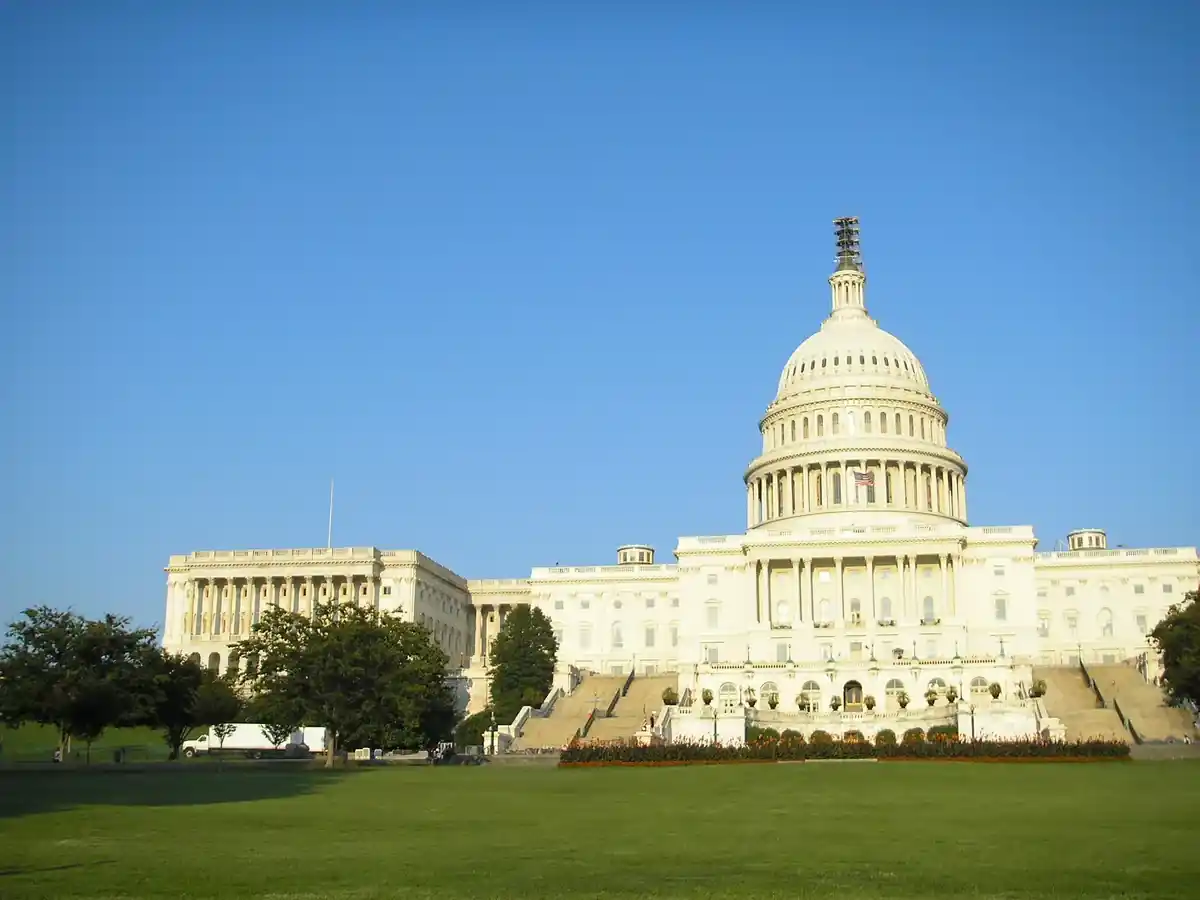
Most national prayer stays at the top, where the cameras are. The decisions that touch your daily life most directly are usually made lower down, by people whose names you may not know. Pray for them by name when you can, and by office when you cannot.
For national leaders — the president, members of congress, federal judges — pray for wisdom under pressure, for truthful information in a noisy environment, and for protection from the corrupting pull of power itself. These are people who make decisions that affect millions, often with incomplete information and under intense public scrutiny. Pray that they would sleep at night with a clear conscience, not just a good poll number, and that they would have at least one friend who can tell them hard truths in private.
For state and regional leaders — governors, legislators, state judges — pray for the unglamorous work: budgets, roads, schools, prisons, hospitals. These decisions rarely make national news, but they decide whether a family can afford childcare, whether a road is safe, whether a prisoner gets a second chance. Pray for competence and compassion together, because a competent leader without compassion builds efficient cruelty, and a compassionate leader without competence builds well-meaning chaos.
For local leaders — mayors, council members, school board members, sheriffs, county officials — pray for the closest decisions of all: the zoning fight, the school curriculum, the policing policy, the water supply. These leaders live among the people they govern. They meet their critics in the grocery store. Pray for their families, who hear the criticism at home, and for their courage to make unpopular decisions when the right decision will cost them friends. If you know one of them personally, tell them you pray for them. Local leaders almost never hear that, and it matters more than you think.
The People Behind the Leader: Staff, Advisors and Families
Here is a prayer focus most guides skip entirely: the people who stand between a leader and reality. A chief of staff decides what reaches the desk and what never does. An advisor drafts the memo, chooses the three options, and frames the question the leader thinks they are answering freely. A press aide decides which criticism the leader ever hears. Pray for these people by role, and by name when you know a name, because they shape decisions as surely as the person who signs them. Pray that they would be truthful when flattery would be easier, that they would bring unwelcome facts into the room early rather than late, and that they would not use proximity to power as a ladder for themselves. A leader surrounded by flatterers will eventually believe the flattery. A leader with one honest advisor has a lifeline.
Pray, too, for the families. A spouse who reads cruel things about their partner before breakfast. Children who hear their parent mocked at school and do not know whether to defend them or stay quiet. Parents who watch a son or daughter age visibly under a job they once celebrated. These families did not stand for election, and they carry a public weight they never chose. Pray for their protection, their privacy, their friendships outside politics, and for a home where the person in office can stop performing and simply be a parent, a spouse, a child again. And pray for the loneliness of office itself. Some decisions cannot be explained, even to friends, without breaking confidences or endangering people. A leader who cannot talk honestly about the hardest part of their job is a lonely person, whatever their title. Loneliness makes people brittle, suspicious and cruel. Prayer that names it is a small act of mercy toward someone you may never meet.
Election Workers and Civil Servants: The Quiet Machinery of a Town

Then pray for the people who keep the machinery running when nobody is watching. Election workers who arrive before dawn, count carefully, follow procedures they did not invent, and go home to neighbors who may now distrust them for doing the job exactly as asked. Clerks who keep records straight. Administrators who process benefits, permits and licenses for people who are frightened, impatient or rude. Teachers, nurses, firefighters, police officers, road crews, librarians — the front line of public life, employed by all of us and thanked by almost none of us. Pray for honesty under pressure, because a small dishonesty in a count, a record or a report can rot trust for years. Pray for protection from threats and exhaustion, because public suspicion has a human cost that never appears in a headline. Pray for competence joined to kindness: that the person behind the counter would have both the skill to do the job right and the grace to do it humanely, and that the rest of us would treat them as neighbors rather than obstacles.
This is also a prayer against cynicism in yourself. It is easy to assume that everyone in public service is self-serving, and that assumption, repeated often enough, becomes a kind of contempt that makes honest prayer impossible. Naming real offices and real work — the ballot counted, the road repaired, the classroom kept open — keeps your prayer grounded. You are not praying for an abstraction called “the system”. You are praying for people with tired feet and full inboxes, doing work your life depends on.
A Short Prayer for Those Who Serve the Nation
National prayer is incomplete if it never names the people who carry out the nation’s hardest work with their own bodies: service members far from home, veterans living with what service cost them, firefighters, police officers, paramedics, and emergency dispatchers who run toward what everyone else runs from. Pray for them by role, and by name when you know one.
Lord, protect those who serve this nation — soldiers, sailors, airmen, marines, and coast guardsmen, and the police, firefighters, and paramedics who answer when we call for help. Keep them safe in danger, steady under strain, and honest in the power they carry. Comfort their families through long absences and hard homecomings, heal what service has wounded, and give veterans work, friendship, and peace after the uniform comes off. Amen.
Pray that prayer on days when service is in the news, and on ordinary days when it is not. A nation is easy to love in the abstract; the people who serve it are where that love becomes specific.
How to Pray When You Disagree
Disagreement is not a reason to stop praying; it is often the reason prayer is most needed, because it is where your heart is most at risk. When you pray for a leader you oppose, do not pray a disguised argument — “Lord, make them see how wrong they are” is a speech, not a prayer. Pray the things you would want prayed for yourself if you held that office: clarity, courage, honesty, good counsel, health, a protected family, and a conscience that stays awake. You can pray for repentance where you believe repentance is needed, but pray it the way you would want someone to pray for your own repentance: specifically, sorrowfully, and without glee.
Watch your language, in prayer and out of it. Calling a leader an enemy in your heart makes honest prayer for them almost impossible, and it leaks into how you talk about neighbors who voted for them. If you cannot yet pray warmly, pray honestly: “Lord, I am angry, and I do not like this person. Help me to want their good anyway.” God can work with that prayer.
Separate the office from the person, and the person from your neighbors. You can honor an office, pray for the person in it, and still disagree — strongly, publicly, peacefully — with their policies. And you can disagree with a policy without deciding that everyone who supports it is stupid or evil. Much of the damage in national life comes not from disagreement itself, but from the contempt that grows around it. Prayer is the daily habit that keeps contempt from taking root, because it forces you to picture the other person as someone God loves and will judge, not as a caricature.
When Your Own Community Is Divided
It is one thing to pray for a divided nation. It is another to live on a divided street. Perhaps your church split over a decision nobody can now discuss without raising their voice. Perhaps your family table has subjects that are simply avoided, and the avoidance itself has become the wound. Perhaps neighbors who once borrowed tools now cross the road to avoid a conversation. Praying for “unity” in the abstract will not touch this. Praying specifically will. Name the street, the congregation, the table. Pray for the two people who have stopped speaking, for the meeting where everyone is bracing for a fight, for the pastor or chairperson caught between factions, for your own part in the freeze — the comment you wish you had not made, the group chat you left, the assumption you never checked.
Then let the prayer change your conduct, in small, verifiable ways. Listen longer than feels natural at the next meeting, and repeat back what you heard before you answer it. Refuse one contemptuous joke, even when it would get a laugh from your side. Have one ordinary conversation — about the garden, the school run, the broken fence — with a neighbor you disagree with, without steering it toward politics. These are not grand reconciliations, and they will not fix a nation. They are how a street, a church or a family begins to be a place again instead of a battlefield. A divided community does not heal because everyone suddenly agrees. It heals because a few people decide, daily, to remain neighbors while they disagree, and prayer is what keeps that decision from curdling into resentment.
A Short Prayer for the Morning News
Lord, before I react, give me wisdom. Give them wisdom too — the leaders in this story, and the people affected by it. Guard my tongue, my temper and my feed today, and show me one just, kind thing I can actually do instead of only having an opinion. Amen.
Keep that prayer where you will actually use it: on your phone, on the fridge, in the first minute after the headlines. The point is the pause. News is designed to make you react instantly, and instant reaction is almost always contempt, fear or a forwarded article you have not read. A ten-second prayer breaks the circuit. It does not make you agree with anyone in the story. It makes you slower to despise them, and that slowness, repeated daily, is a genuinely spiritual achievement in a country that rewards instant outrage. Pray it before you post, before you argue, before you forward. Then, if you still believe something must be said, say it after the prayer, in words you would be willing to pray aloud.
Praying for Leaders of Other Nations Too
Your own country deserves the most of your prayer, because it is where you live, just as your own family deserves the most of your prayer because they are yours. But do not stop at the border. Pray for rulers elsewhere — for wisdom, restraint and mercy in places you will never visit, where decisions are made about war, food, prisons and worship. Pray for believers under governments that restrict or punish their faith, and for missionaries and pastors working in those places, whose safety often depends on a ruler’s whim. Pray for peace between nations, not as a vague wish but as a concrete hope: that leaders would talk before they threaten, that mediators would be heard, that ordinary people would not pay for their rulers’ pride.
This outward prayer protects your inward one. Love of your own country, uncorrected, hardens quietly into the belief that God belongs to it alone, that its interests are God’s interests, and that other nations exist mainly as threats or markets. Praying regularly for other nations breaks that spell. It reminds you that God loves people you will never meet, judges rulers you will never vote for, and is building a kingdom no flag can contain. A citizen who prays for other nations as well as their own is harder to manipulate, slower to fear, and more likely to recognize a neighbor — even a foreign one — as a person rather than a problem.
A Weekly Pattern for Praying for the Nation
Keep it small enough to keep. Pick one day a week and pray through four things in ten minutes: one national leader by name, one local leader by name, one group suffering or overlooked in your nation right now, and one way you can act justly this week. Write the names down. Over a year, you will have prayed specifically for dozens of leaders, and trained yourself to see the nation as people, not headlines.
On the other days, keep a one-sentence prayer ready for the moment the news angers or frightens you: “Lord, give them wisdom, and give me grace.” Pray it before you post, before you argue, before you forward the article. It will not make you agree with anyone. It will make you slower to despise them, and that slowness is, in a divided nation, a genuinely spiritual achievement. Pair the prayer with one concrete act a week — a respectful letter, a conversation with a neighbor who votes differently, help for a local family in need — so that your intercession does not become a substitute for citizenship, but the fuel for it.
For more help in this library, visit our Guides page and explore our Leadership & Ministry archive, read our Statement of Faith, and keep going with companion guides — our prayers for church leaders and pastors for those who shepherd a congregation, and our prayers for grief and loss for a nation, and a people, in mourning.
The Leaders You Actually Meet, and Praying On When Nothing Changes

I did not meet my member of Congress last year. I did meet the woman who chairs the school board, in the cereal aisle, the week after a vote that split our town in half. She looked tired in a way no headline captures, and she was buying milk like anyone else. That is where most of your praying will actually live: the people whose decisions you can feel in your street, your school, your water bill, and who have to live next door to the people they disappointed.
Start there, by name, and start small. Pray for the school board member deciding a budget that will cut something someone loves, for the council member weighing a housing plan that will anger half the room whatever they choose, for the deputy and fire crew called out at 2 a.m. long after the meeting ends. These are not abstract offices. The deputy’s family hears about his calls at home. When you pray for leaders you disagree with, it helps to pray for the Tuesday version of them — the tired person, not the speech — because that is the person God actually loves, and the person you might one day have to work with.
And then keep praying when nothing changes, because mostly, nothing will change quickly. I prayed for one local decision for months, and the decision went the other way, and I wanted to stop. What kept me going was not a result but a smaller habit: one sentence, once a week, for the same three local names, whether I felt hopeful or not. Over a year, though, something else changed — I stopped dreading the sight of those names, I listened longer at meetings, and I once thanked a council member in person instead of only criticizing him online.
Frequently Asked Questions
Should I pray for a leader I believe is doing serious wrong? Yes. Pray for wisdom, for truth to reach them, for repentance where it is needed, and for protection for the people affected by their decisions. Praying for someone is not approving of them, and it does not replace lawful, peaceful opposition where that is right. It keeps your opposition honest, because you are asking God to work in the person, not just to remove an obstacle.
Is it wrong to pray for my own country more than for others? No — you pray most for the place where you live, just as you pray most for your own family. But do not stop there. Pray regularly for other nations, for missionaries and persecuted believers, and for leaders everywhere, so that love of your own country does not harden into the belief that God belongs to it alone.
What if praying for leaders feels pointless, because nothing changes? Then pray anyway, and look for change in the smaller places: in your own temper, in one conversation, in one local decision you influenced. National change is slow and often invisible while it happens. The Bible’s command to pray for rulers was given to people with far less political power than you have, and it was given because prayer itself matters to God, not because it is a technique for getting quick results.
What do I pray when the morning news makes me angry? Pray the short morning-news prayer above, before you do anything else: wisdom for them, wisdom for you, and one just, kind thing you can actually do. Anger itself is not the problem — some news should anger you — but anger that immediately becomes contempt or a forwarded post helps no one. A ten-second pause, prayed honestly, often changes what you say next, and sometimes whether you say it at all.
How do I pray when my own church or street is divided? Name the real people and the real meeting, not “unity” in general. Pray for the two people who have stopped speaking, for the person caught in the middle, and for your own part — the comment you regret, the assumption you never checked. Then match the prayer with one small act of neighborliness: listening longer, refusing a contemptuous joke, one ordinary conversation that is not about politics. Divided communities rarely heal by agreement arriving all at once. They heal when a few people keep choosing to remain neighbors while they disagree.

The PrayersWisdom Editorial Team writes long-form, Bible-based prayer guides for Christians going deeper in prayer.