There is a particular kind of shame that only comes from coming home. You walk back into a place you love — a house, a family, a church, a country — and you find it is not what it should be. Worse, you realize you are part of the reason why. The people you came to help have been making the same mistakes that got everyone into trouble in the first place, and there is no one else to blame.
That is exactly where Ezra stood.
Ezra had traveled roughly 900 miles from Babylon to Jerusalem, carrying silver and gold for the temple and a letter from the king of Persia giving him authority to teach God’s Law. He arrived full of hope. The exiles had come home. The temple stood again. The story was supposed to be turning toward restoration. Then, on his fourth day in the city, the leaders came to him with news that stopped him cold: the people — including priests and Levites — had married into the surrounding nations, the very thing the Law of Moses had forbidden, the very pattern of compromise that had led to the exile in the first place.
Ezra did not call a meeting. He did not write a memo. He tore his clothes, pulled out his own hair, and sat down on the ground, stunned, until the evening sacrifice. And then he prayed one of the most honest prayers in the whole Bible.
This is a study of Ezra’s prayer — what he actually said, why he said it that way, and what it teaches us about praying honestly when we, or the people we love, have gone wrong.
Who Was Ezra?
Before we can understand Ezra’s prayer, we need to know who Ezra was — because the man explains the prayer.
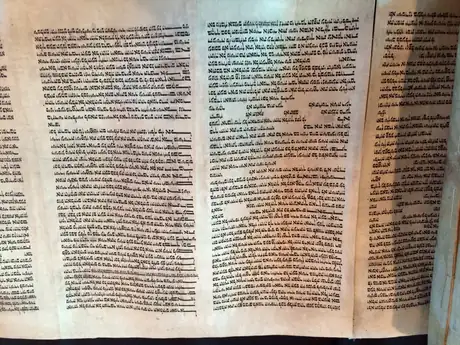
Ezra was a priest and a scribe. He was a direct descendant of Aaron, the first high priest, which meant priesthood ran in his blood. But the title that defines him in the book that bears his name is “scribe” — in Hebrew, sofer. In our world, a scribe sounds like a copyist, someone who writes down what others say. In Ezra’s world, a scribe was a scholar and teacher of God’s Law, a person who had devoted his life to studying, teaching, and living out the commandments Moses had received. Ezra 7:10 says it plainly: “For Ezra had set his heart to seek the law of Yahweh, and to do it, and to teach in Israel statutes and ordinances.”
He lived during the Persian period, about 458 BC — roughly eighty years after the first group of exiles had returned to Jerusalem under Zerubbabel, and about thirteen years before Nehemiah would arrive to rebuild the walls. Ezra led a second wave of returning exiles, around 1,500 men plus their families, on a four-month journey from Babylon to Jerusalem. King Artaxerxes of Persia gave him silver, gold, and a royal letter authorizing him to appoint judges and teach the Law. Ezra was, in every sense, a man of the book and a man of authority.
So what religion was Ezra? The question comes up often, and the answer is simple: Ezra was a faithful Jew — a priest of Yahweh, the God of Israel. He did not found a new religion. He practiced the faith of Abraham, Moses, and David: one God, the covenant at Sinai, the Law, the temple, and the promises. What made him stand out was not a different faith but a deeper devotion to the faith he already had. When the book of Ezra calls him “a ready scribe in the law of Moses” (Ezra 7:6, KJV), it is telling us that this was a man whose whole life was shaped by Scripture — and that is why his prayer sounds the way it does. He prayed out of the Bible he had spent his life studying.
The Story Behind the Prayer: Ezra 9:1-5
Ezra’s prayer does not come out of nowhere. It comes out of a report, and the report is devastating.
“Now when these things were done, the princes came near to me, saying, ‘The people of Israel, and the priests and the Levites, have not separated themselves from the peoples of the lands, doing according to their abominations… For they have taken of their daughters for themselves and for their sons, so that the holy seed have mixed themselves with the peoples of the lands. Yes, the hand of the princes and rulers has been chief in this trespass.'” (Ezra 9:1-2, WEB)
The returned exiles were intermarrying with the Canaanites, Hittites, Perizzites, Jebusites, Ammonites, Moabites, Egyptians, and Amorites — the same peoples whose practices had corrupted Israel centuries earlier. This was not a small failure. The leaders themselves were the worst offenders. And the danger was not racial or cultural; it was spiritual. The Law forbade these marriages because they pulled God’s people toward other gods. It was the exact sin that had led to the exile. They had come home from Babylon, and within a generation they were rebuilding the road back to it.
Ezra’s response is physical before it is verbal. “When I heard this thing, I tore my garment and my robe, and plucked off the hair of my head and of my beard, and sat down confounded.” (Ezra 9:3, WEB)
To a modern reader, this looks extreme — even theatrical. It was not. In the ancient world, tearing your clothes was the recognized sign of grief, shock, and mourning. When Jacob believed Joseph was dead, he tore his clothes. When David heard of Saul’s death, he tore his clothes. It was what you did when words were not enough and the news was too bad to meet standing up. Pulling out hair and beard was a further sign of anguish and humiliation. Ezra was not performing. He was falling apart in front of God and in front of the people, because the news was that bad.
And then he sat there. The text says he sat “confounded” — stunned, desolate — until the time of the evening sacrifice. He did not rush to fix it. He did not start giving orders. He sat with the grief until the hour of prayer came. Only then, at the evening sacrifice, did he rise, kneel, spread out his hands, and pray. That sequence matters. Ezra’s prayer was not his first reaction. It was what came after he had let the weight of the sin settle on him. If you want to understand why his prayer sounds so heavy, start here: he had been sitting with it for hours.
That is the background of Ezra 9:1-15, and it is the key to its meaning. The prayer is short — ten verses — but it carries the whole history of Israel inside it.
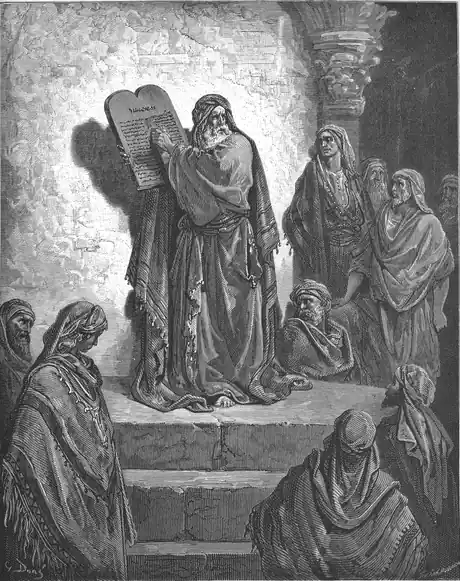
Ezra’s Prayer in Ezra 9:6-15 — Verse by Verse
Here is the prayer itself, in the World English Bible (WEB), with an explanation of what Ezra is actually saying. You can read the whole chapter online at BibleGateway — Ezra 9 (WEB). Read it slowly. It is one of the great confessions of Scripture.
“I said, ‘My God, I am ashamed and blush to lift up my face to you, my God; for our iniquities have increased over our head, and our guiltiness has grown up to the heavens.'” (Ezra 9:6, WEB)
Ezra begins with shame. Not guilt in the abstract — shame, the kind that makes you unable to look someone in the face. “I am ashamed and blush to lift up my face to you.” He is standing before God as a man who cannot even raise his head. And notice the pronoun: “our iniquities.” Ezra had not married a foreign wife. He had not committed the sin he is confessing. But he says “our.” He belongs to this people, and their sin is his to carry before God. This is corporate confession — one man standing in the gap for a whole community — and it is the first thing that makes this prayer different from most of the prayers we pray.
The image he uses is of guilt piling up: iniquities “increased over our head,” guiltiness “grown up to the heavens.” Sin is not a small stain here. It is a flood above the head, a tower reaching the sky. Ezra is not minimizing. He is not saying “we made a few mistakes.” He is saying the pile of wrong is taller than we are.
If you read Ezra chapter 9 in the KJV, the words are older but the force is the same: “O my God, I am ashamed and blush to lift up my face to thee, my God: for our iniquities are increased over our head, and our trespass is grown up unto the heavens.” (Ezra 9:6, KJV)
“Since the days of our fathers to this day, we have been in great guiltiness; and for our iniquities, we, our kings, and our priests, have been delivered into the hand of the kings of the lands, to the sword, to captivity, to plundering, and to confusion of face, as it is this day.” (Ezra 9:7, WEB)
Ezra refuses to treat this as a new problem. He reaches back through the generations: “since the days of our fathers.” The sin is old. The guilt is inherited. And he names the consequence plainly: this is why they went into exile. Their kings, their priests, and the people were handed over to foreign kings — to sword, captivity, plunder, and public shame. Ezra is doing something most of us avoid: he is connecting present sin to past consequences, and admitting that the punishment was fair.
“Now for a little moment grace has been shown from Yahweh our God, to leave us a remnant to escape, and to give us a nail in his holy place, that our God may lighten our eyes, and give us a little reviving in our bondage.” (Ezra 9:8, WEB)
Then the turn — and it is a beautiful one. After two verses of unrelenting honesty about guilt, Ezra names the grace. God has left them a remnant. A small group escaped. He has given them “a nail in his holy place” — a peg, a secure foothold, a small fixed point in the temple — and “a little reviving.” Notice the smallness of the words: “a little moment,” “a little reviving.” Ezra does not exaggerate God’s grace, and he does not minimize it either. It is small, it is real, and it is everything. They are still in bondage — still under Persian rule — but God has given them light for their eyes and breath in their lungs. This is the hinge of the whole prayer: everything after this is built on the fact that God has already been merciful.
“For we are bondservants; yet our God has not forsaken us in our bondage, but has extended loving kindness to us in the sight of the kings of Persia, to give us a reviving, to set up the house of our God, and to repair its ruins, and to give us a wall in Judah and in Jerusalem.” (Ezra 9:9, WEB)
Ezra keeps naming the grace: the Persian kings, improbably, have favored them. The temple has been rebuilt. The ruins have been repaired. They have a wall — protection, a boundary, a home. God did all of this for a people who did not deserve it. Ezra lists the blessings one by one, not to flatter God but to make the next verse sting all the more.
“Now, our God, what shall we say after this? For we have forsaken your commandments, which you have commanded by your servants the prophets, saying, ‘The land, to which you go to possess it, is an unclean land through the uncleanness of the peoples of the lands, through their abominations, which have filled it from one end to another with their filthiness. Now therefore don’t give your daughters to their sons, neither take their daughters for your sons, nor seek their peace or their prosperity forever; that you may be strong, and eat the good of the land, and leave it for an inheritance to your children forever.'” (Ezra 9:10-12, WEB)
“What shall we say after this?” Ezra is out of words — and out of excuses. God gave them everything, and they broke the one clear command he had given about the land: do not intermarry, do not seek the peace and prosperity of these peoples at the cost of faithfulness. Ezra quotes the commandment itself, at length, so that no one can pretend it was unclear. The command was plain. The violation was plain. And the reason was plain too: the land was to stay holy, and the inheritance was to pass to their children. They had traded all of that away.
“After all that has come on us for our evil deeds, and for our great guilt, since you, our God, have punished us less than our iniquities deserve, and have given us such a remnant, shall we again break your commandments, and join ourselves with the peoples that do these abominations? Wouldn’t you be angry with us until you had consumed us, so that there should be no remnant, nor any to escape?” (Ezra 9:13-14, WEB)
Here is the question that drives the prayer to its climax: after all of this — after the exile, after the mercy, after the return — shall we do it again? Ezra’s question is rhetorical, and it is terrifying. If they break the commandments again, what is left for God to do but finish the judgment? There would be no remnant this time. No one left to escape. Ezra is not threatening the people. He is showing them the edge of the cliff they are standing on.
“Yahweh, the God of Israel, you are righteous; for we remain a remnant that has escaped, as it is today. Behold, we are before you in our guiltiness; for no one can stand before you because of this.” (Ezra 9:15, WEB)
The prayer ends where it began — with the people standing before God in their guilt, with nothing to say for themselves. “You are righteous.” That is the last word about God. And “no one can stand before you because of this” is the last word about them. There is no request. No “please fix it.” No promise to do better. Just the truth, laid out in front of a righteous God, and the hope — unstated but present in every line — that the God who left them a remnant once will not abandon them now.
That is Ezra’s prayer of confession. Ten verses. No demands. No bargaining. Just honesty.
What Makes Ezra’s Prayer Different
Most prayers ask for something. Ezra’s prayer does not. It is worth stopping on that, because it is the thing that makes this prayer strange to modern ears — and the thing that makes it so powerful.
First, it is confession without petition. Ezra never asks God to do anything in this prayer. He does not ask for forgiveness in so many words. He does not ask for a second chance. He does not ask for the people’s hearts to change. He simply tells the truth about what happened, what God did, and what they did in return — and then stops. The prayer is an act of honesty, and it trusts God to know what to do with honesty. That is a kind of faith most of us have never practiced: praying without an ask, and believing that telling the truth to God is enough.
Second, it is corporate. Ezra says “we” and “our” throughout, even though he is personally innocent of the sin. He does not stand apart from his people and point at them. He stands with them and takes their guilt on his own lips. That is what intercession actually is — not praying for people from a safe distance, but praying as one of them. If you lead a family, a church, or a community, this is the part of Ezra’s prayer that should stop you in your tracks. The leader confesses first, and confesses as one of the guilty, not as their judge.
Third, it remembers history. Ezra’s prayer is full of the past: “since the days of our fathers,” the exile, the remnant, the rebuilding. He does not pray as if today is the first day of the story. He prays as a man who knows where his people have been, what God has already done, and how quickly they forgot it. Good confession remembers. It does not pretend the sin came out of nowhere.
Fourth, it makes no excuses. There is no “but the surrounding nations were attractive” and no “but the leaders started it.” There is no “we were under a lot of pressure.” Ezra names the command, names the violation, and names the consequence. That bluntness is not harshness. It is the only way confession works. A confession with an excuse in it is not a confession.
And fifth, it ends with God, not with us. “You are righteous.” The last word is not about their guilt but about God’s character. Ezra’s prayer leaves the people standing before a righteous God — and that is exactly where hope lives, because a righteous God is also the God who left them a remnant.
Ezra’s Prayer of Repentance: How to Pray Like This Today
Ezra’s prayer is not just history. It is a pattern. If you have ever needed to confess — to God, for yourself, or on behalf of people you love — this prayer shows you how. Here is what it looks like in practice.
Name the sin plainly. Ezra did not say “we have had some relational challenges.” He said what happened: they married against God’s command. If you are praying about a failure in your own life, say what it was, in plain words, to God. Vague confession is no confession at all.
Include yourself. Even if you did not do the thing, ask whether you are part of the people who did. Ezra was innocent of the marriages and still said “our.” That is not false guilt. It is solidarity — the recognition that we belong to each other, and that the sins of our family, our church, or our nation are ours to bring before God.
Remember God’s mercy before you ask for more. Ezra spent two verses naming the grace God had already shown before he ever got to the fresh failure. That order matters. When you remember what God has already done for you, your confession stops being self-punishment and becomes gratitude with open eyes. You are not begging a stranger for mercy. You are talking to the God who already left you a remnant.
Stop minimizing. “Our iniquities have increased over our head.” Ezra did not shrink the sin to a manageable size. If you have been telling yourself “it wasn’t that bad,” Ezra’s prayer is the corrective. Tell the truth about the size of it. God already knows the size of it.
Leave the outcome with God. Ezra’s prayer makes no demand and extracts no promise. It ends with the people standing before God in their guilt. That is the hardest part of praying like Ezra: trusting that honesty is enough, and that the God who hears it is righteous — and merciful.
If it helps, here is a short prayer in Ezra’s pattern, written in plain modern words you can pray as your own:
God, I am ashamed to lift my face to you — not because you are harsh, but because I know what I have done, and what we have done. Our failures have piled up higher than we can see. And yet you have been merciful to us in ways we did not deserve: you kept us, you provided for us, you gave us another chance. We broke your commands again after all of that. We have nothing to say for ourselves except this: you are righteous, and we are standing before you in our guilt. Have mercy on us, for the sake of your own name. Amen.
That prayer does not fix everything. Ezra’s prayer did not fix everything either — the story continues into Ezra 10, where the people have to act on what they have confessed, making the painful choice to separate from the marriages that violated the covenant. Confession is the beginning of repentance, not the whole of it. But it is the beginning, and without it nothing else can start.
If your own need is for restoration after a broken relationship, our guide to prayers for reconciliation walks through the same pattern — honest confession first, then the hard work of making things right.
The Second Prayer: Nehemiah 9:5-37
Ezra’s prayer in Ezra 9 is not the only great prayer connected to his name. The second one is longer — much longer — and it belongs to the same story. It is the prayer of Nehemiah 9, and it is often called the Nehemiah 9 prayer of Ezra, because Ezra is at the center of the events around it, even though the prayer itself is spoken by the Levites.
The setting is a national day of fasting and repentance, about thirteen years after Ezra’s prayer. The people have gathered in sackcloth, with dust on their heads. They have spent a quarter of the day reading the Law and another quarter confessing their sins. Then the Levites stand up and lead them in a prayer that retells the entire history of Israel — from creation to the present day — in thirty-three verses.
It begins the way Ezra’s prayer ends, with God: “Stand up and bless Yahweh your God from everlasting to everlasting! Blessed be your glorious name, which is exalted above all blessing and praise! You are Yahweh, even you alone. You have made heaven, the heaven of heavens, with all their army, the earth and all things that are on it, the seas and all that is in them, and you preserve them all. The army of heaven worships you.” (Nehemiah 9:5-6, WEB)
Then it walks through the story: Abraham called out of Ur. The Exodus. The Red Sea. The Law at Sinai. The manna and the water. And at every step, the same rhythm — God is faithful, the people rebel, God is merciful anyway. “But they and our fathers dealt proudly, hardened their neck, didn’t listen to your commandments… but you are a God ready to pardon, gracious and merciful, slow to anger, and abundant in loving kindness, and didn’t forsake them.” (Nehemiah 9:16-17, WEB)
That line — “a God ready to pardon, gracious and merciful, slow to anger, and abundant in loving kindness” — is the beating heart of both prayers. It is the same God Ezra addressed in Ezra 9, and it is the reason confession is possible at all. If God were only righteous, confession would be a death sentence. Because he is also ready to pardon, confession is the door back.
The two prayers fit together like a short cry and a long song. Ezra 9 is ten verses, sharp and immediate: we sinned, you were merciful, we sinned again, you are righteous. Nehemiah 9 is thirty-three verses, slow and sweeping: here is everything you did, here is everything we did, here is your mercy every single time. One is the prayer of a man on his knees at the evening sacrifice. The other is the prayer of a whole nation on a fast day. Both end in the same place: a people standing before God with nothing to offer but the truth, and a God whose mercy is bigger than their history.
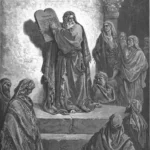
The bridge between the two is Nehemiah 8, where Ezra stands on a wooden platform and reads the Law to the people from morning until midday, while the Levites explain it so everyone understands. The people weep when they hear it — and Ezra tells them not to weep, because “the joy of Yahweh is your strength.” Reading the Law led to confession, confession led to prayer, and prayer led to covenant renewal. That is the whole arc of Ezra’s ministry: the Word read, the sin named, the prayer prayed, the people renewed.
Ezra’s Prayer for Protection and Forgiveness
There is one more piece of Ezra’s prayer life that readers often ask about, and it belongs earlier in the story — before the confession, on the road from Babylon. It is Ezra’s prayer for protection, and it is tied to a fast.
Ezra had been given permission by the Persian king to return to Jerusalem, and the king had offered him soldiers and horsemen to protect the journey. Ezra refused them. Not because he was reckless, but because he had already told the king something he could not take back: “The hand of our God is on all those who seek him, for good; but his power and his wrath is against all those who forsake him.” (Ezra 8:22, WEB) Having said that, he was ashamed to ask the king for an armed escort. So he did the only thing he could do: he called a fast.
“Then I proclaimed a fast there, at the river Ahava, that we might humble ourselves before our God, to seek from him a straight way for us, for our little ones, and for all our substance.” (Ezra 8:21, WEB)
“So we fasted and begged our God for this, and he was entreated of us.” (Ezra 8:23, WEB)
This is the other side of Ezra’s prayer life, and it matters for the confession too. The same man who would later tear his clothes over sin is the man who, months earlier, humbled himself before God on a dangerous road with children and treasure and no soldiers. In both cases the pattern is identical: honest need, no pretending, and trust placed entirely in God. He did not pray a formula for safety. He fasted, he begged, and God answered.
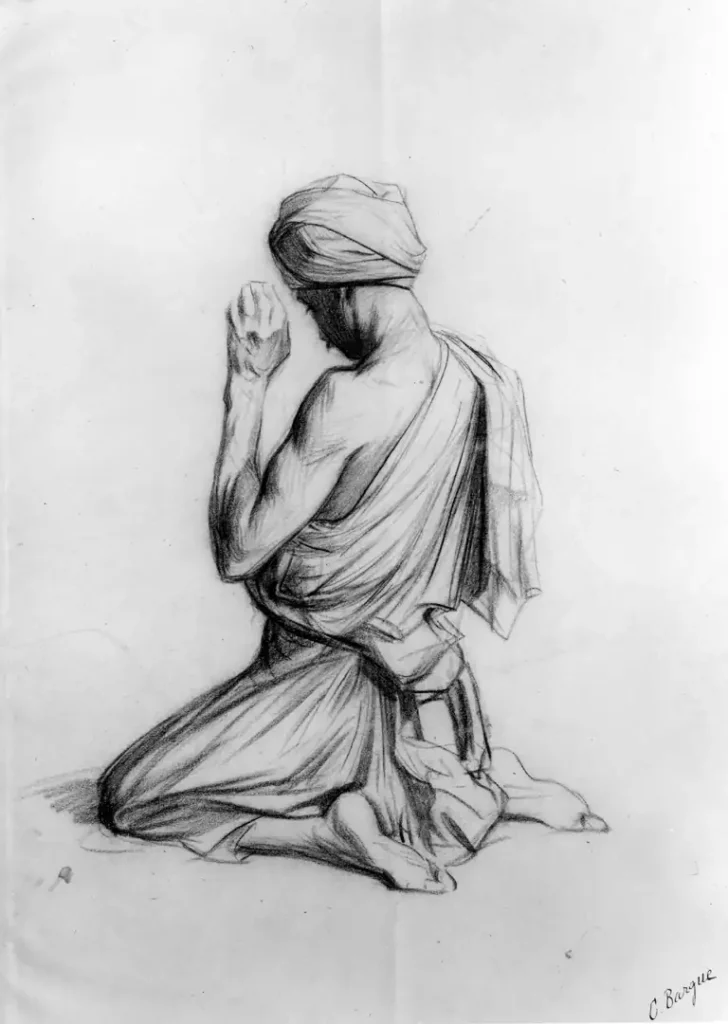
And Ezra’s prayer for forgiveness is the same pattern again. Forgiveness in Ezra’s story is not a transaction. It is what happens when a people tell the truth about what they have done and stand before a God who is “ready to pardon.” The forgiveness is not earned by the eloquence of the prayer. It is received by the honesty of it. That is worth remembering the next time you sit down to confess something and find yourself reaching for impressive words. Ezra’s prayer is not impressive. It is honest. And honesty is what God answers.
If you are praying for the leaders of your own nation or community — the way Ezra prayed for his — our guide to prayers for our nation and leaders follows the same ground: confession for the people first, then intercession for those who lead them.
How to Do an Ezra Fast
The question “how to do an Ezra fast” is one of the most common searches connected to this passage, so it deserves a straight answer.
In the Bible, the Ezra fast was the fast at the river Ahava in Ezra 8:21-23: a corporate fast, called by a leader, for a specific purpose — protection on the journey and God’s guidance for the road ahead. The people humbled themselves, abstained from food, and prayed. It lasted for the journey, and God answered.
When people talk about an “Ezra fast” today, they usually mean one of two things: a fast modeled on Ezra 8 (a short fast for guidance and protection, often before a decision or a journey), or a longer fast modeled on the twenty-one-day fast associated with Daniel — which is sometimes confused with Ezra because both men lived in the Persian period and both fasted. The two are different men and different fasts. If you are following Ezra, the pattern is Ezra 8: a defined purpose, a defined time, a community or family fasting together where possible, and prayer as the point — not the hunger.
A few honest cautions belong here. A fast is not a way to force God’s hand. It is not a diet plan with a spiritual label. It does not earn answers. And it is not safe for everyone: if you are pregnant, if you have diabetes or another medical condition, if you take medication that requires food, or if you have a history of eating disorders, do not fast from food without talking to a doctor first. God does not ask you to harm your body to get his attention. A fast that harms you is not devotion; it is damage. If a food fast is not safe for you, the honest equivalent is to give up something else for a set time — a meal’s worth of time spent in prayer, an evening without screens — and to pray with the same focus Ezra had: humble, specific, and trusting.
The point of the Ezra fast was never the fasting. It was the humility. “We humbled ourselves before our God, to seek from him a straight way.” Start there, and the rest follows.
What Ezra 9 Teaches Us About Prayer
If you read Ezra 9 once, you will remember the torn clothes. If you read it twice, you will remember something deeper — a set of lessons about prayer that most of our prayer lives could use.
Confession comes before petition. Ezra does not open with a request. He opens with the truth. Many of our prayers are shopping lists with a quick “sorry” at the top. Ezra reverses the order, and the prayer is better for it. When confession comes first, the requests that follow are honest ones.
Corporate prayer is real prayer. Ezra prayed for his people as one of them. If you only ever pray for yourself, you are missing half of what prayer is. Try praying for your family, your church, or your country the way Ezra prayed for Israel — with “we” on your lips and their sins carried as your own concern. Our guide to prayers for church leaders and pastors is a good place to start if you carry that kind of responsibility.
God’s mercy is the ground of hope, not the reward for good behavior. Ezra’s prayer works because God had already been merciful. The remnant, the temple, the wall — all of it came before the confession. Hope in prayer is not built on our performance. It is built on God’s track record.
Repentance is a community act. Ezra’s prayer was followed by action — the painful, costly action of Ezra 10, where the people separated from the marriages that violated the covenant. Real repentance is never only words. But it always starts with words, spoken honestly, in front of God.
Waiting is part of praying. Ezra sat in silence from the report until the evening sacrifice before he prayed at all. If you are in a season where God seems silent, that waiting is not wasted time. Our guide to prayers for waiting seasons speaks directly to that place — the long stretch between the bad news and the answer.
And one more: grief is a form of prayer. Ezra tore his clothes before he opened his mouth. Sometimes the most honest thing you can do before God is to sit down, stunned, and let the weight land. God is not offended by grief. The prayer that follows grief is often the truest one you will ever pray. If you are carrying that kind of weight, our guide to prayers for grief and loss was written for exactly that moment.
Frequently Asked Questions
What is Ezra’s prayer in the Bible?
Ezra’s prayer is the prayer of confession in Ezra 9:6-15. After learning that the returned exiles had intermarried against God’s Law, Ezra tore his clothes, sat in grief until the evening sacrifice, and then prayed a ten-verse confession: he admitted the people’s guilt, remembered God’s mercy in leaving them a remnant, and ended by standing before a righteous God with nothing to say for themselves. A second, longer prayer connected to Ezra is the historical prayer in Nehemiah 9:5-37, prayed at the covenant renewal.
What religion was Ezra?
Ezra was a faithful Jew — a priest and scribe of Yahweh, the God of Israel. He practiced the faith of Abraham, Moses, and David: one God, the covenant at Sinai, the Law, and the temple. He did not found a new religion. What set him apart was his devotion: Ezra 7:10 says he had set his heart to study the Law, to do it, and to teach it in Israel.
How to do an Ezra fast?
The Ezra fast was the fast at the river Ahava in Ezra 8:21-23: a corporate fast with a specific purpose — God’s protection and guidance on the journey to Jerusalem. To follow the pattern today: choose a clear purpose, set a defined time, fast from food if it is safe for you, and spend the time in prayer. It is not a formula for forcing God’s hand, and it is not safe for everyone — if you are pregnant, take medication that requires food, or have a medical condition, talk to a doctor first.
What did Ezra say in the Bible?
His most famous words are the prayer of Ezra 9:6-15, which begins, “My God, I am ashamed and blush to lift up my face to you, my God; for our iniquities have increased over our head, and our guiltiness has grown up to the heavens” (WEB). He also spoke the words of the Law to the people in Nehemiah 8, and his prayer of confession in Ezra 9 ends with the line, “Yahweh, the God of Israel, you are righteous; for we remain a remnant that has escaped.”
What is Ezra 9 about, and what does Ezra 9:6-15 mean?
Ezra 9 is about the crisis of intermarriage among the returned exiles and Ezra’s response to it. Verses 1-5 tell the story: leaders report the sin, and Ezra tears his clothes in grief. Verses 6-15 are the prayer itself — a confession of corporate guilt, a remembrance of God’s mercy in preserving a remnant, and a final acknowledgment that no one can stand before a righteous God in their guilt. The chapter’s lesson is that honest confession, with no excuses, is the beginning of repentance — and the story continues in Ezra 10, where the people act on what they have confessed.
A Final Word
Ezra’s prayer is short. You can read it in two minutes. But it has been prayed over, studied, and wept over for two and a half thousand years, and the reason is simple: it tells the truth. About God — righteous, merciful, ready to pardon. About us — guilty, forgetful, and still standing only because he left us a remnant. About prayer — that the most powerful thing you can say to God is the honest thing.
If you are standing where Ezra stood — looking at a mess, some of it yours, some of it your people’s — you do not need better words. You need true ones. Sit with the weight of it for a while, the way he did. Then kneel, spread out your hands, and tell God the truth. He has heard that prayer before. He knows what to do with it.

The PrayersWisdom Editorial Team writes long-form, Bible-based prayer guides for Christians going deeper in prayer.