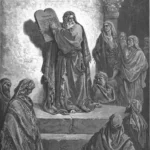
There is a kind of prayer you only pray when you have run out of room. Not the polished kind, not the kind you say with other people listening, but the raw, honest kind that comes out when you are at the bottom and you know it. The prayer of Jonah is that kind of prayer. A man who had spent three days running from God, then three days sinking toward the bottom of the sea, finally stops running and starts talking to God from the darkest place he has ever been: the belly of a great fish.
Most of us know Jonah as a story — a man, a whale, a big fish, a city that repents. We picture it on a Sunday school wall. But the book of Jonah is not really a story about a fish. It is a story about a man who would rather drown than obey, and about a God who would rather rescue him than let him go. And right in the middle of that story sits one of the most honest prayers in the whole Bible: Jonah chapter 2, the prayer of Jonah from the belly of the fish.
This guide reads that prayer slowly, verse by verse. We will look at what happened before Jonah prayed, what each line of his prayer actually means, why the prayer sounds so much like a psalm, how it compares with the prayer of Hezekiah, and how you can pray Jonah 2 in your own life when you are in a hard season of your own. If you have ever felt like you were at the bottom — of a marriage, a job, a habit, a choice you cannot undo — this prayer was written for you.
What Happened Before the Prayer of Jonah
You cannot understand the prayer of Jonah without the story that leads to it. The prayer only makes sense once you know how far Jonah had fallen — and how hard he had fought to get there.
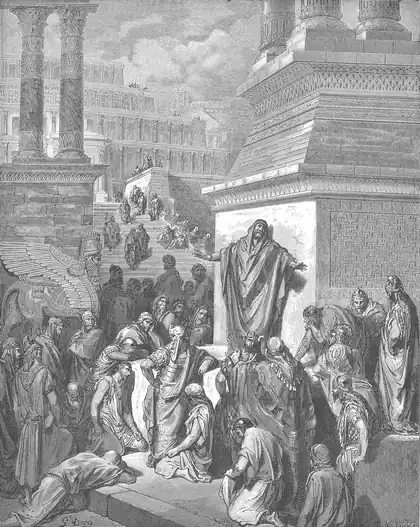
God told Jonah to go to Nineveh, the capital of Assyria, and preach against it. Nineveh was the great enemy city, a place of cruelty and violence, and Jonah wanted nothing to do with it. So instead of going east to Nineveh, he went west. He went down to Joppa, found a ship sailing for Tarshish — the far end of the known world, in the opposite direction — paid the fare, and went below deck to sleep. He was not just disobeying. He was running as far as he could in the other direction.
Then the storm came. The Bible says God hurled a great wind on the sea, and the ship was about to break apart. The sailors were terrified. They threw cargo overboard. They cried out to their own gods. And Jonah slept through it all in the bottom of the ship, until the captain woke him and told him to call on his God too. When the lots fell on Jonah and the sailors asked who he was, he told them the truth: he was a Hebrew, he feared the Lord, the God of heaven, who made the sea and the dry land — and he was running away from him. The men asked what they should do, and Jonah told them to throw him into the sea. They tried rowing back to land first, but the storm only got worse, so they did what he said. The moment Jonah hit the water, the sea went calm.
That is where most retellings stop and the fish shows up. But notice something first: Jonah did not pray on the ship. He did not pray when the storm was raging, or when the sailors were begging him, or when they picked him up to throw him overboard. The man who feared God did not call on God until there was nothing left to call on. The Bible says, “Yahweh prepared a great fish to swallow up Jonah, and Jonah was in the belly of the fish three days and three nights” (Jonah 1:17, WEB). Three days in the dark. Three days with nowhere to run. And only then, finally, Jonah prayed.
That delay matters. It tells us something true about how prayer often works in real life. Plenty of people — maybe you — do not pray their most honest prayer when trouble starts. They pray it when trouble has done its work, when the options are gone, when the bottom is the only place left to stand. Jonah’s prayer begins in that place. If you have ever wondered whether God still listens to a prayer that comes late, or to a prayer from someone who caused their own mess, this chapter is your answer.
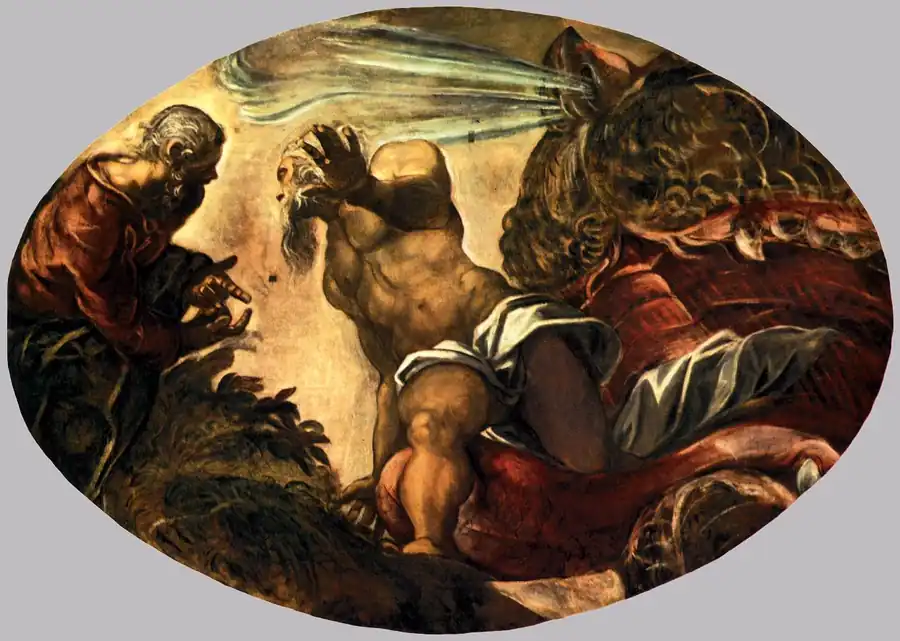
The Prayer of Jonah, Verse by Verse (Jonah 2:1-10)
Here is the whole prayer as the Bible records it, in the World English Bible, which is in the public domain. Read it once straight through before we take it apart. You can also read the full chapter with notes at BibleGateway, Jonah 2 (WEB).
“Then Jonah prayed to Yahweh, his God, out of the fish’s belly. He said, ‘I called on Yahweh out of my distress, and he answered me. Out of the belly of Sheol I cried, and you heard my voice. For you threw me into the deep, into the heart of the seas. The flood was all around me. All your waves and your billows passed over me. I said, “I have been banished from your sight; yet I will look again toward your holy temple.” The waters surrounded me, even to the soul. The deep was around me. The weeds were wrapped around my head. I went down to the bottoms of the mountains. The earth barred me in forever; yet you have brought up my life from the pit, Yahweh my God. When my soul fainted within me, I remembered Yahweh. My prayer came in to you, into your holy temple. Those who regard lying vanities forsake their own mercy. But I will sacrifice to you with the voice of thanksgiving. I will pay that which I have vowed. Salvation belongs to Yahweh.’ Then Yahweh spoke to the fish, and it vomited out Jonah on the dry land.” (Jonah 2:1-10, WEB)
The prayer itself runs through verse 9; verse 10 is the story picking back up, with God speaking to the fish and Jonah landing on dry ground. Some study notes number the prayer as Jonah 2:1-9 for exactly that reason. Either way, this is the whole thing — nine verses of prayer, one verse of deliverance.
Now let us walk through it slowly, because every line does work.
“I called on Yahweh out of my distress, and he answered me” (Jonah 2:2)
Jonah starts with a fact, not a feeling: he called, and God answered. He says this before he is out of the fish. He is still in the dark, still in the belly, and he already speaks of God’s answer in the past tense. That is not wishful thinking. It is the first lesson of the prayer: God hears before God delivers. The answer Jonah is talking about is not rescue — rescue has not happened yet. The answer is that God heard him. For a man who had spent days running from God’s presence, the fact that God was still listening was already a kind of rescue. If you are praying right now and nothing has changed yet, Jonah would tell you that being heard is not nothing. It is the first thing.
“Out of the belly of Sheol I cried” (Jonah 2:2)
Sheol is the Hebrew word for the place of the dead — the grave, the underworld, the place you do not come back from. Jonah says he cried out from there. He is not being poetic for effect. He believed he was as good as dead. The sea had him, the deep had him, and in his mind he was already in the grave. His prayer begins at the lowest point a person can reach and still be alive. That is why this prayer has comforted so many people in grief and loss: it does not start with strength. It starts with a man who thinks he is finished, and a God who hears him anyway. Our guide to prayers for grief and loss explores more of what honest prayer sounds like when you feel like you have lost everything.
“You threw me into the deep” (Jonah 2:3)
Here is the most startling line in the prayer. Jonah does not blame the sailors, or the storm, or the fish. He says God threw him into the deep. He is right, in a way he may not fully understand: the storm was God’s doing, the sea was God’s doing, and even the fish was God’s doing. But notice what he does not do — he does not accuse God of being cruel. He states the fact and keeps praying. The flood was all around him. The waves and billows passed over him. He names the chaos honestly and leaves it in God’s hands. There is no pretending the water is not there. Real prayer does not require you to describe your situation as better than it is.
“Yet I will look again toward your holy temple” (Jonah 2:4)
This is the turning point of the whole prayer, and it is only one word long: “yet.” Jonah says, “I have been banished from your sight” — he believes he has been cut off from God — “yet I will look again toward your holy temple.” The temple was in Jerusalem, far away, in the opposite direction from where Jonah was headed. But the temple was where God’s presence dwelled, and looking toward it was an act of turning. Jonah cannot get to the temple. He cannot even see it. But he can look toward it. He can turn his face back in the direction he ran from. That is what repentance looks like in its simplest form: not a long speech, not a perfect apology, but a turn. One word — yet — and the prayer changes direction. If you are in a season of waiting, when nothing is moving and you cannot see the way forward, our guide to prayers for waiting seasons may help you pray in the meantime.
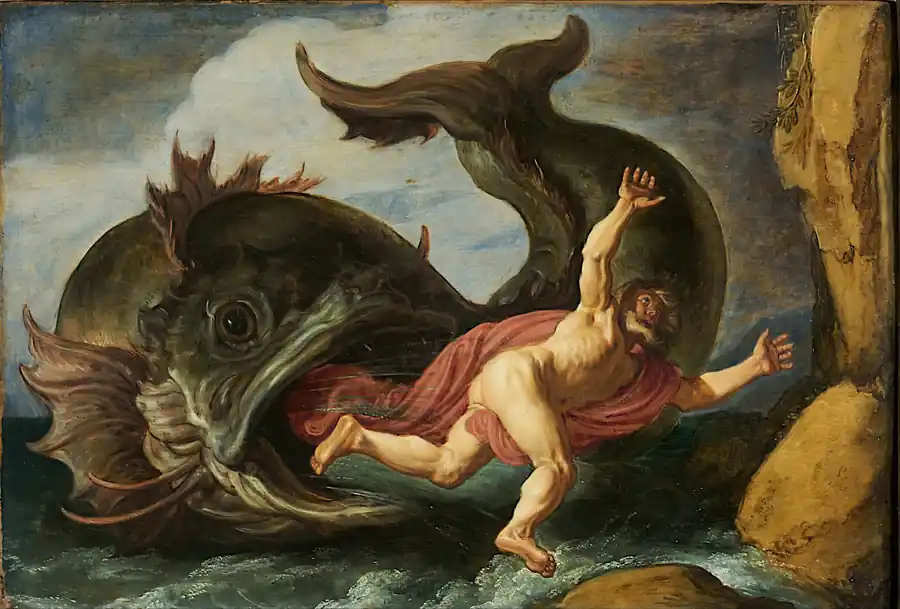
“The waters surrounded me, even to the soul” (Jonah 2:5-6)
Jonah goes back to describing the deep, and the description gets worse: waters to the soul, weeds wrapped around his head, down to the roots of the mountains, the earth barring him in forever. He is describing drowning in slow motion. And then, right in the middle of the worst of it: “yet you have brought up my life from the pit, Yahweh my God.” Again that “yet.” Again the past tense before the rescue. Jonah speaks as if the deliverance has already happened, while he is still inside the fish. Faith, in this prayer, is not pretending things are fine. It is speaking of God’s rescue as certain while you are still waiting for it.
“When my soul fainted within me, I remembered Yahweh” (Jonah 2:7)
“I remembered.” That is all it took. Jonah did not find a new argument or a better plan. He remembered the God he already knew. He remembered what God was like, and his prayer — the one he had been avoiding for days — finally came in to God, into the holy temple. There is a lesson here for anyone who has drifted: you do not need a new faith to come back. You need to remember the one you already have. The prayer you stopped praying is still there, waiting to be prayed.
“Those who regard lying vanities forsake their own mercy” (Jonah 2:8)
This is the hardest line in the prayer, and the most personal. “Lying vanities” means empty idols — the things we trust instead of God. Jonah had trusted his own plan: run to Tarshish, out of God’s reach, and the problem would go away. That plan was a lying vanity, and it nearly cost him his life. He is saying, in effect, that clinging to false hopes is the same as walking away from mercy. It is a warning to himself as much as to anyone else.
“I will sacrifice to you with the voice of thanksgiving. I will pay that which I have vowed. Salvation belongs to Yahweh.” (Jonah 2:9)
The prayer ends with a vow and a confession. Jonah promises to offer a sacrifice of thanksgiving and to pay what he vowed — and then he says the line that the whole prayer has been building toward: “Salvation belongs to Yahweh.” Not to the sailors. Not to the fish. Not to Jonah’s own cleverness. Salvation belongs to the Lord. It is the most famous verse from Jonah, and for good reason: it is the whole book in one sentence. God saves; that is his business, not ours. And the moment Jonah says it, the story moves. “Then Yahweh spoke to the fish, and it vomited out Jonah on the dry land” (Jonah 2:10). The prayer ends, and the fish lets him go.

What Jonah’s Prayer Teaches Us About Praying at the Bottom
Jonah’s prayer is short, but it carries a whole theology of prayer in it — the kind you only learn when you are out of options. Here is what it teaches, plainly.
Honesty comes before polish. Jonah does not dress his prayer up. He says he is banished, drowning, wrapped in weeds, barred in forever. He does not start with praise and work his way around to the problem. He starts with the problem. If your prayers feel too rough to say out loud, Jonah is your permission slip: God has heard worse, from a worse place, and he answered.
God hears before God delivers. Jonah says “he answered me” while he is still inside the fish. The rescue comes later, in verse 10, but the hearing comes first, in verse 2. If you are waiting for an answer and nothing has changed, it does not mean you have not been heard. It means you are in the middle of the story, not at the end of it.
Thanksgiving can come before the rescue. Jonah vows a sacrifice of thanksgiving while he is still in the belly. He does not wait to see dry land before he thanks God. That is not denial. It is trust — the decision to thank God for who he is, not only for what he has done yet. If you can thank God in the dark, you are praying the way Jonah prayed.
A turn is enough. Jonah’s repentance is not a long confession with all the details. It is one word — “yet” — and a look toward the temple. He turns his face back toward God. That is the whole of it. If you have been running, you do not need a perfect apology to come back. You need a turn. Our guide to prayers for reconciliation looks at what turning back looks like when a relationship — with God or with another person — needs mending.
Your own choices do not disqualify your prayer. Jonah was in the fish because of his own disobedience. He chose Tarshish. He chose the ship. He chose to run. And God still heard him, still sent the fish, still brought him up, still gave him a second chance. The prayer of Jonah is proof that a prayer from inside your own consequences is still a prayer God answers. If you are a parent praying for a child who has run their own way, our guide to prayers for a wayward child may help you find words for that long wait.
Jonah 2 Is a Psalm — and That Matters
One of the most interesting things about the prayer of Jonah is that it sounds like a psalm. That is not an accident. Almost every line of Jonah 2 echoes a psalm Jonah would have known by heart:
- “I called on Yahweh out of my distress, and he answered me” (Jonah 2:2) echoes Psalm 120:1 — “In my distress, I cried to Yahweh. He answered me.” (WEB)
- “All your waves and your billows passed over me” (Jonah 2:3) echoes Psalm 42:7 — “Deep calls to deep at the noise of your waterfalls. All your waves and your billows have swept over me.” (WEB)
- “The waters have come up to my neck” is the opening of Psalm 69:1-2 — “Save me, God, for the waters have come up to my neck. I sink in deep mire, where there is no foothold.” (WEB)
- “In my distress I called on Yahweh” is Psalm 18:6 — “In my distress I called on Yahweh, and cried to my God. He heard my voice out of his temple.” (WEB)
Jonah did not invent his prayer from nothing. He prayed with words he already knew — the words of worship he had learned long before he ever boarded a ship for Tarshish. That is why this matters for us: the prayers you learn in the good times are the prayers that come back to you in the bad times. The psalms you memorize, the verses you carry, the songs you sing on ordinary Sundays — they are not just for ordinary Sundays. They are the language you will reach for when you are in the belly of the fish and cannot think of your own words. Jonah’s prayer is a psalm because Jonah knew the psalms. The best preparation for praying in a crisis is praying now, when there is no crisis.
The Prayer of Jonah and the Prayer of Hezekiah
People often ask about the prayer of Jonah and Hezekiah together, and it is a fair comparison, because the two prayers are near opposites — and both were answered.
Hezekiah was the king of Judah, and his prayer is recorded in Isaiah 38. He was sick and dying, and the prophet Isaiah told him to set his house in order because he would not recover. Hezekiah turned his face to the wall and prayed: “Remember now, Yahweh, I beg you, how I have walked before you in truth and with a perfect heart, and have done that which is good in your sight” (Isaiah 38:2-3, WEB). He wept bitterly. And God answered: “I have heard your prayer. I have seen your tears. Behold, I will add fifteen years to your life” (Isaiah 38:5, WEB).
Compare the two men. Hezekiah was faithful and facing a death he did not cause. Jonah was disobedient and facing a death he did cause. Hezekiah prayed for more time; Jonah prayed from inside a consequence. Hezekiah’s prayer was about his record — “remember how I walked before you.” Jonah’s prayer was about God’s mercy — “salvation belongs to Yahweh.” And God answered both.
That is the point of putting the two prayers side by side. There is no single kind of prayer God answers. He answers the prayer of the faithful man on his sickbed and the prayer of the runaway in the belly of a fish. He answers the prayer that says “remember my faithfulness” and the prayer that says “I have nothing to offer but thanksgiving.” If you have ever wondered whether your prayer is the wrong kind — too angry, too late, too selfish, too broken — Jonah and Hezekiah together say it is not. The question is not whether your prayer is the right kind. The question is whether you will pray it.
Jonah’s Prayer in the Quran
The story of Jonah is also told in the Quran, where he is called Yunus, and his prayer of repentance is one of the most quoted verses in Islam. When Yunus was in the belly of the fish, he called out in the darkness: “There is no god but You; glory be to You; indeed, I was among the wrongdoers” (Quran 21:87). The verse is known as the prayer of Yunus, and Muslims repeat it in times of distress, just as Christians turn to Jonah 2.
The two accounts agree on the heart of the story: a prophet who ran, a great fish, three days in the dark, a prayer of repentance, and a God who heard and delivered. The details differ — the Quran’s telling is shorter and does not include the full psalm-like prayer of Jonah chapter 2 — but the shape is the same. It is worth knowing, because it shows how widely this prayer has traveled. A man in the belly of a fish, calling out to God in the dark, is a story that belongs to more than one tradition, and the prayer at its center has comforted people in more than one faith. We note it here respectfully, as a matter of fact, not as a debate.
How to Apply Jonah 2 to Your Life
Reading Jonah’s prayer is one thing. Praying it is another. Here is how to take Jonah 2 into your own life, step by step, without turning it into a formula.
Start with the truth, not with the right words. Jonah’s prayer works because it is honest. So start there. Say what is actually happening: the job you lost, the marriage that is breaking, the habit you cannot beat, the choice you regret. Name it plainly, the way Jonah named the waters and the weeds. God already knows. Saying it out loud is for you, not for him.
Use the “yet.” Jonah’s whole prayer turns on one word. Try it yourself: “I feel banished from your sight, yet I will look toward you.” “The waters are up to my neck, yet you have brought my life up from the pit.” You do not have to feel the “yet” to say it. Jonah said it while he was still in the fish. The turn comes first; the feeling follows.
Borrow the words you already know. If you cannot find your own words, use Jonah’s — or a psalm’s. Pray Psalm 120:1, or Psalm 42:7, or Jonah 2:2 itself. There is no rule that says your prayer has to be original to count. The best prayers are often borrowed, and God does not grade for originality.
Thank God before the rescue. This is the hardest part of Jonah’s prayer, and the most powerful. Try thanking God for one true thing while you are still waiting — for his character, for a friend who stayed, for the fact that you are still here to pray. Thanksgiving in the dark is not pretending. It is trusting.
Make the vow small and keep it. Jonah vowed a sacrifice of thanksgiving and to pay what he had vowed. If you make a promise to God in a hard season, make it one you can keep: a daily prayer, a step toward the person you hurt, a gift to someone in need. Small, kept vows are worth more than grand ones you forget.
Then get up and go to your Nineveh. Jonah’s prayer ends with dry land — and with the same command he ran from: go to Nineveh. The second chance was not a holiday. It was a return to the assignment. Your Nineveh is the thing you have been avoiding: the apology, the doctor’s appointment, the conversation, the job application, the step back toward God. Pray the prayer, then take the step. If you are new to this kind of honest, turning-back prayer, our guide to prayers for new Christians is a good place to start.
Lessons from Jonah’s Prayer
If you take nothing else from Jonah 2, take these:
- God hears you in the dark. Jonah was heard before he was delivered. Being heard is the first answer.
- Honesty is the beginning of prayer, not the end of it. You do not have to clean yourself up before you pray. Jonah prayed from the belly of a fish.
- One turn is enough. Repentance is not a performance. It is a “yet” and a look toward God.
- The words you learn now are the prayers you will need later. Jonah prayed a psalm because he knew the psalms.
- Salvation belongs to the Lord. Not to your plans, not to your record, not to your timing. To him. That is the whole prayer in one line — and the whole book in one line.
Frequently Asked Questions About the Prayer of Jonah
What is a famous verse from Jonah?
The most famous verse from Jonah is Jonah 2:9: “Salvation belongs to Yahweh” (WEB). It is the last line of Jonah’s prayer from the belly of the fish, and it sums up the whole book: God saves, and salvation is his work, not ours. Another well-known verse is Jonah 1:17, which sets up the prayer: “Yahweh prepared a great fish to swallow up Jonah, and Jonah was in the belly of the fish three days and three nights.” Jesus also referred to Jonah in Matthew 12:40: “For as Jonah was three days and three nights in the belly of the whale, so will the Son of Man be three days and three nights in the heart of the earth.”
How can I apply Jonah 2 to my life?
Start by praying honestly about where you actually are, the way Jonah did — name the waters, name the deep. Then use Jonah’s “yet”: turn your face back toward God even if you cannot see the way out. Borrow the words of the prayer itself (Jonah 2:2, 2:7, 2:9) if you cannot find your own. Thank God for one true thing before the rescue comes. And then take the next step you have been avoiding — your Nineveh — because Jonah’s prayer ends with dry land and a return to the assignment.
What is the deeper meaning of Jonah’s prayer?
The deeper meaning is that Jonah’s prayer is a prayer of repentance disguised as a psalm of thanksgiving. On the surface it sounds like a man thanking God for rescue, but underneath it is a man admitting he ran, admitting he was wrong, and discovering that God’s mercy reaches even into the belly of a fish — even into the consequences of his own choices. The prayer’s deeper meaning is that there is no place so low, and no mess so much your own fault, that God’s salvation cannot reach you there. “Salvation belongs to the Lord” means exactly that: it belongs to him, so it does not depend on you deserving it.
Did Jonah repent before he died?
The Bible does not tell us when or how Jonah died, so we cannot say what his final days looked like. But Jonah did repent inside the fish — his prayer in Jonah 2 is itself an act of repentance: he turns back toward God’s temple, he renounces empty idols, and he vows thanksgiving. After the fish set him on dry land, he went to Nineveh and preached, and the city repented. The book ends with Jonah angry that God spared Nineveh, and God gently questioning him — which suggests Jonah’s repentance was real but incomplete, like most of ours. He turned back to God, but he still had more to learn about God’s mercy toward other people. That is an honest ending, and a hopeful one: God used him anyway.
What does “Salvation belongs to the Lord” mean in Jonah 2:9?
It means that rescue is God’s work, not ours. Jonah could not save himself from the fish, from the sea, or from the consequences of running from God. No sailor could save him, no plan could save him, and his own efforts had only made things worse. “Salvation belongs to the Lord” is Jonah’s confession that deliverance comes from God alone — by his mercy, on his terms, in his time. For us, it means the same thing: the rescue you need, whether it is forgiveness, healing, provision, or a way out of a mess you made, does not depend on you being good enough to earn it. It belongs to the Lord, and he gives it freely.
A Prayer You Can Pray from the Belly of the Fish
If you are in a hard season right now, here is a prayer built from Jonah’s own words. Pray it slowly, and make it yours.
Lord, I called to you out of my distress, and you heard me. I am in deep water, and the waves feel like they are passing over me. I have been running, and I know it. Yet I will look again toward you. When my soul faints within me, I will remember you, Lord. I will thank you before the rescue comes, because you are good even here. Salvation belongs to you, and you alone. Bring my life up from the pit, and set my feet on dry land again — and when you do, I will go where you send me. Amen.

The PrayersWisdom Editorial Team writes long-form, Bible-based prayer guides for Christians going deeper in prayer.